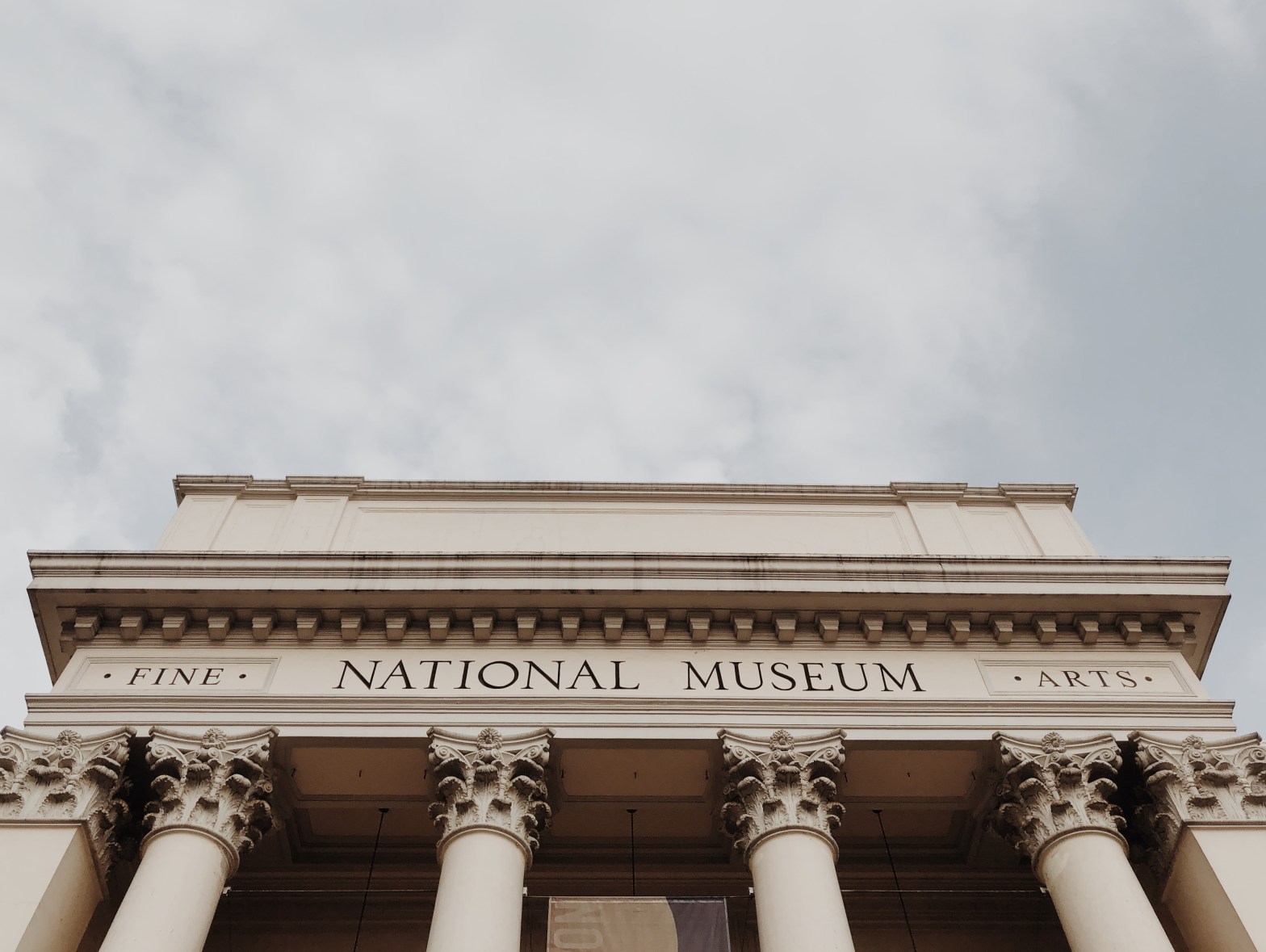
NATIONAL MUSEUM OF FINE ARTS
FIRST STOP:
LET’S TAKE A LOOK AT THE PRESERVED SCULPTURES INSIDE THE NATIONAL MUSEUM OF FINE ARTS!
National Museum of Fine Arts is an institution that acquires, documents, preserves, exhibits, and fosters scholarly study and public appreciation of works of arts, specimens, and cultural and historical artifacts of the cultural heritage of the Filipino and the natural history of the Philippines itself.
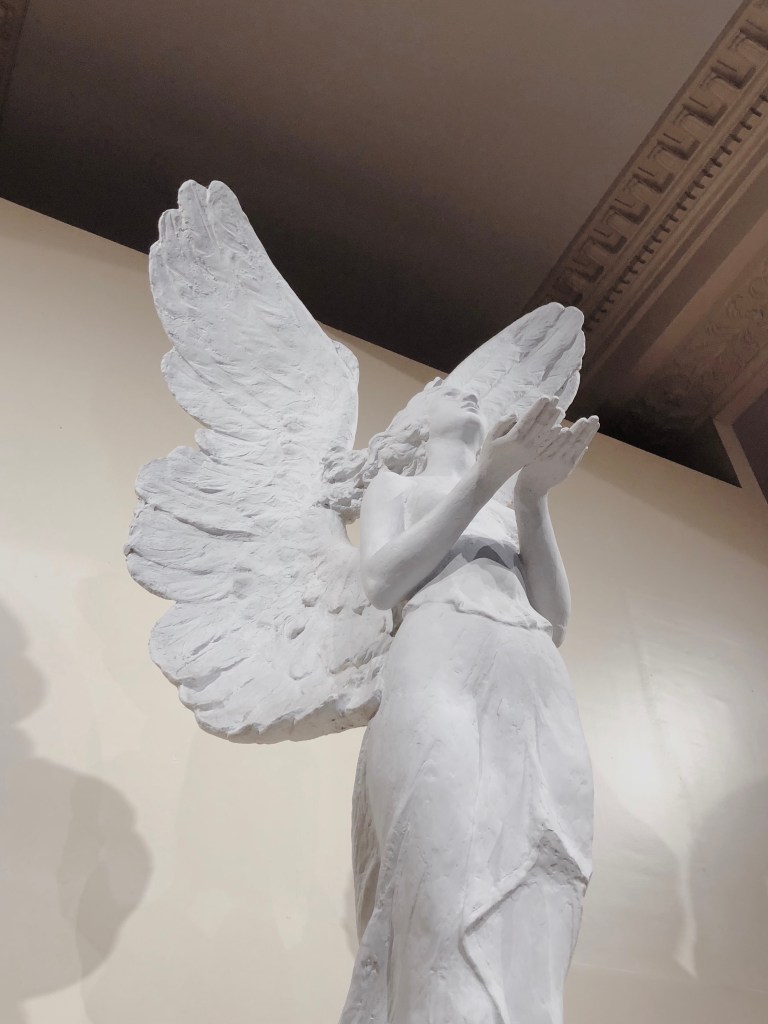
DIWATA
by Guillermo E. Tolentino
The “Diwata” statue, a work of the famous Guillermo E. Tolention, is created on the 1950s when the artist returned from his studies in the US and Europe. It is made from reinforced concrete with dimensions of 2.90 by 1.20 meters. Before this statue, he just completed a work on 1933, the pillar of the Bonifacio Monument located in Caloocan City. Despite his newly acquired fame at that time, he still continued to accept commissioned private works and thus, the statue serving as a reminder of his humbleness.
Upon entering the first room of the National Museum of Fine Arts, this statue will be the first thing that visitors will see after registering and leaving their things on the baggage counter of the building. This is at the main hall of the museum wherein visitors generally start their tour inside. With a light yellowish background, you will see a winged fairy with a symmetrical shadow behind it. Having the name itself “Diwata,” it surely looks like she was guarding all the paintings and other artworks inside the museum. This statue is part of the Philippine Art collection from the 17th to 19th centuries.
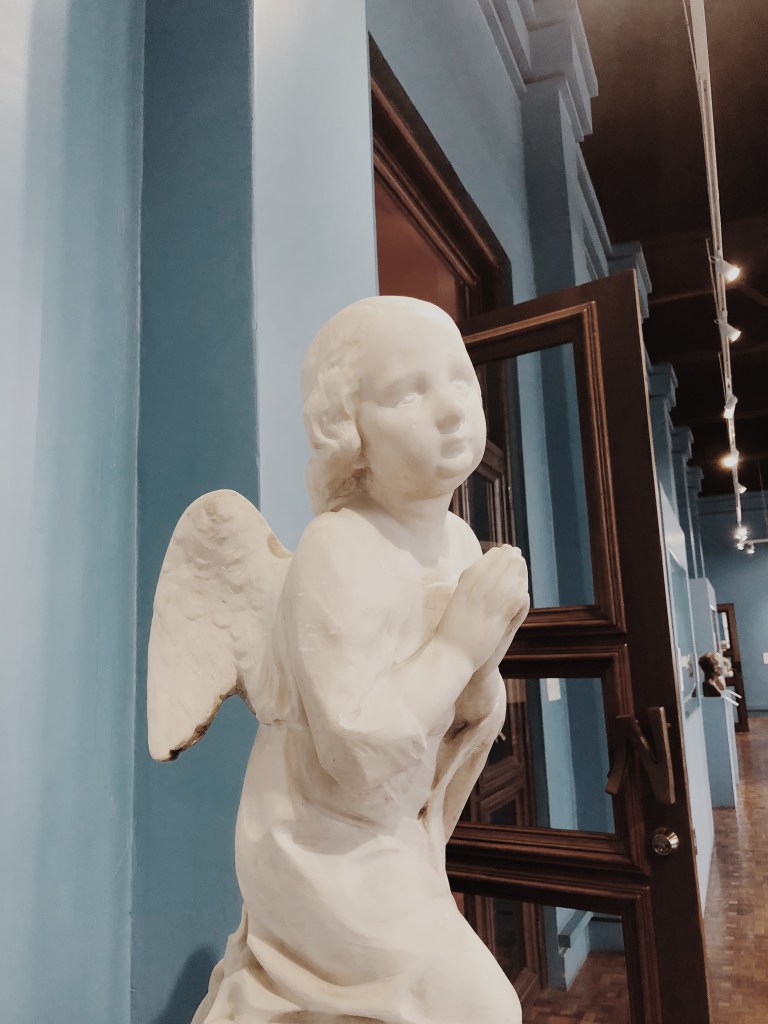
A PRAYING ANGEL
by Guillermo E. Tolentino
This statue is another work of Guillermo E. Tolentino year 1935. It is located at the museum’s blue room together with other statuettes, sculpted busts of our National heroes, and former Philippine Presidents.
When you carefully examine the piece of work, you’ll see a young angel with wings with its hands put together. It may be a representation of one of the many values of the Filipinos, the love for praying. Although nowadays, youths often forget to pray and thank the Lord unlike the youths in the past. This statue serves as a model and reflection of the values that Filipinos had and should bring back again in the present times.
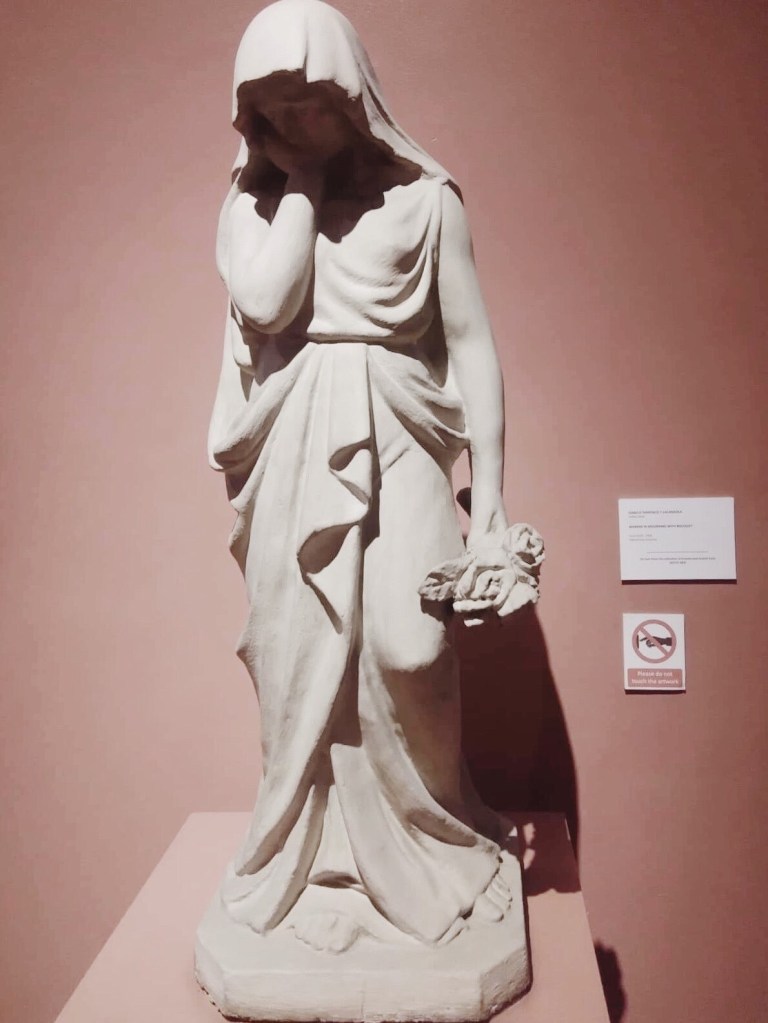
WOMAN IN MOURNING WITH BOUQUET
by Isabelo Tampinco y Lacandola
Isabelo Tampico’s patterns are oriented, native, and distinctly Filipino. He incorporated Baroque ornamentation in his works, transforming them into patterns Filipinos can appreciate. The master sculptor did not merely contribute to the growth of Filipino culture – he also strove to give his fellow citizens an identity. With his exceptional talent, one of his wooden sculptures in 1876 known as the “busto de madera” was selected to be one of the two entries representing the Philippines at the Universal Exposition in Philadelphia.
Woman in Mourning with Bouquet is a sculpture of polychrome concrete made by Tampico. Tampico partly hid the face of the woman to show her deep sorrow. The height seems realistic and the way it was sculpted showed the layers and cringes on crepes of the clothing and veil perfectly.
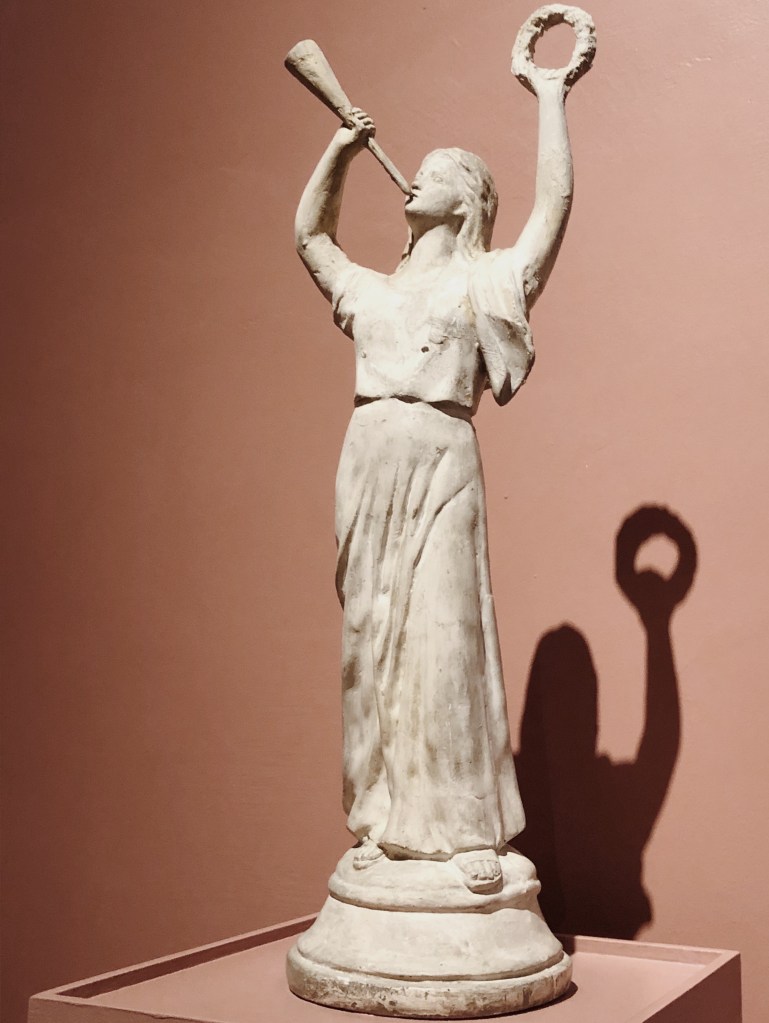
FIGURINE OF VICTORY
by Isabelo Tampinco y Lacandola
This was sculpted by Isabelo Tampinco. I think that this sculpture shows how people feel and act during victory. Plaster of Paris was used in sculpting this figurine. Tampinco’s handiworks were featured on the altar, the pillars, the ceilings and the other intricate portions of the church. Specific examples of his work were polychrome wood figures of saints and angels. The sculpture is not detailed, the arms does not emphasize much and is just curved to look like its holding something. Alao the fingers and the feet, does not emphasize much. The dress contains lines that would make it is overlapping or having divisions. I think it is a trumpet, but it does mot have details as well. But there is more to that, for me it represented the end goal we all dream to reach in our lifetime. Being successful will never come easy. But with good morals, great family, and a load of a hard work, anything is possible.
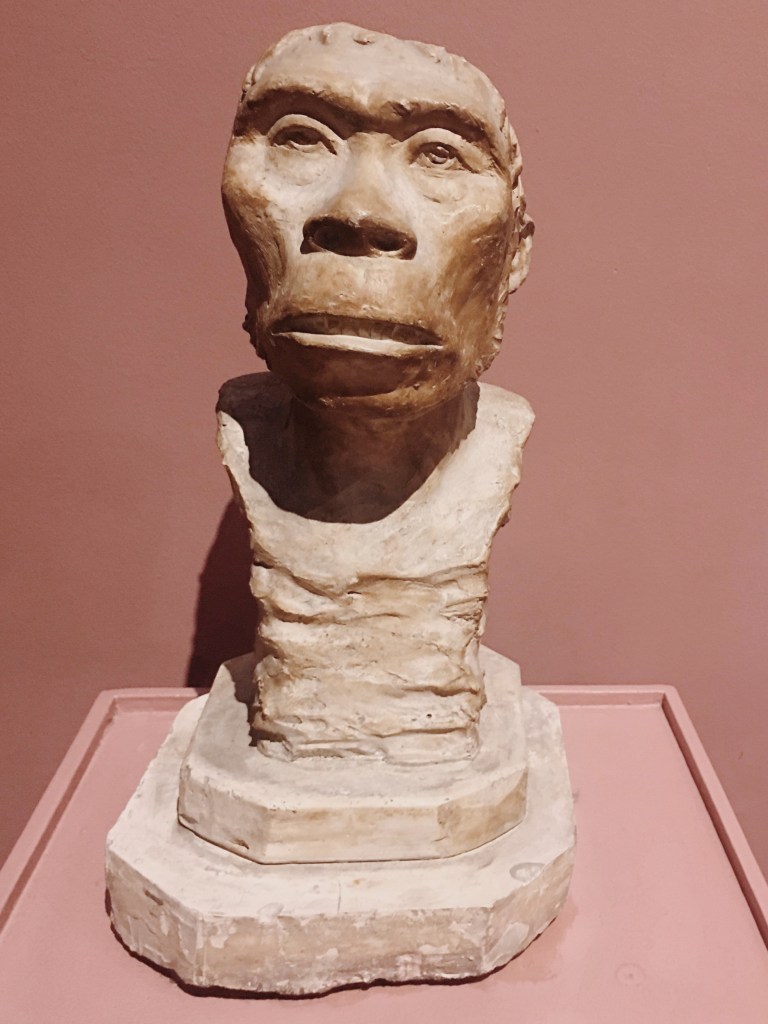
PREHISTORIC MAN
by Isabelo Tampinco y Lacandola
It was created by Isabelo Tampinco Y Lacandola. The sculpture depicts the pre-historic man or the human evolution of mankind. The sculpture was really impressive. The face is almost recognizable as human face but still has the features of an ape or monkey. I was thinking how great Mr. Isabelo is when he was doing this sculpture. I think this sculpture was made not just to let people see what humans looked like before, but also wants people to realize how wonderful our evolution was, that it was really incredible and unbelievable.
The sculpture looks very detailed especially on the face as it describes and show the eyes, nose,mouth, ears and even hair of a man. The base is sufficient enough to support the entire sculpture and the form of the sculpture can easily tell any viewer that it is a pre historic man. The sculpture was molded like a clay with the color of bronze and you can see some contrast of colors used in the chest part of the sculpture.
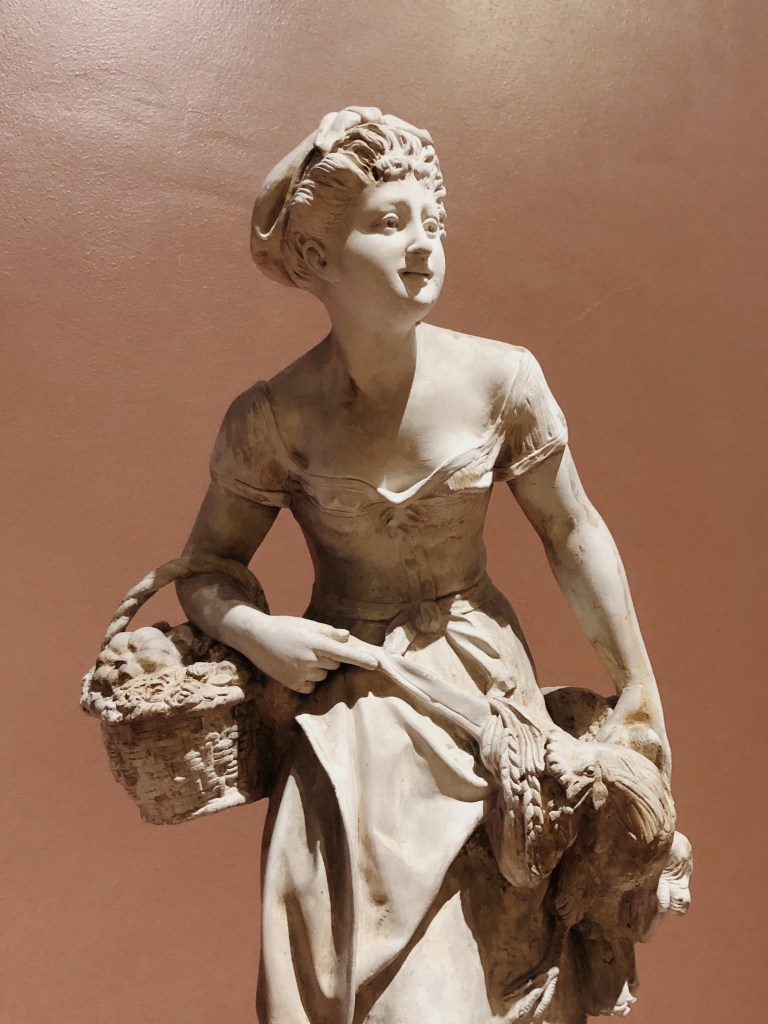
FARM GIRL WITH BASKET
by Isabelo Tampinco y Lacandola
This was sculpted by Isabela Tampinco y Lacandola. I think this sculpture shows how life before for girls are simple. Just picking fruits or wandering around while holding a basket.
The sculpture is detailed, it shows how the girl is holding the basket. The dress shows lines that have some divisions. And how the girl is holding its dress upward shows how realistic it can be. But it shows more than that, it shows that even though life is very difficult we can always look back at the good old days and remember what life is really about. Lastly it looks surreal.
MUSEO DE INTRAMUROS
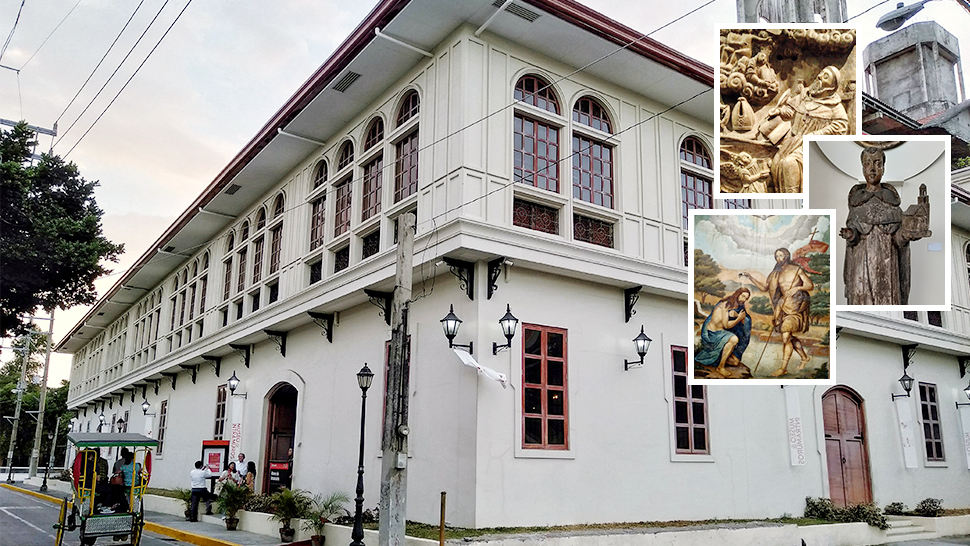
picture from townandcountry.ph
SECOND STOP:
LET US ADMIRE THE PAINTINGS INSIDE THE MUSEUM OF INTRAMUROS!
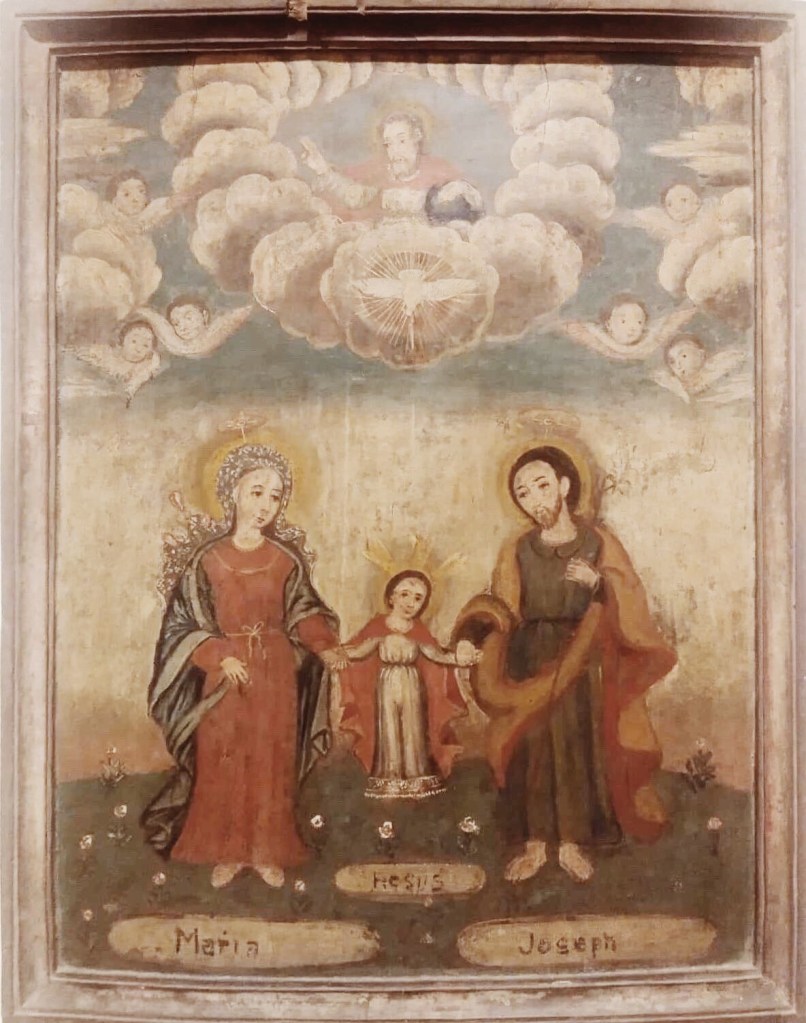
LA SAGRADA FAMILIA
This painting may have been inspired by the painting of the Filipino artist Damian Domingo, one of the earliest recognized masters in Philippine Art. Sagrada Familia means “Holy Family.” There are many paintings of the Sagrada Familia mainly because of its religious nature. In this particular painting, spellings of Hesus, Maria, and Joseph may reveal the Filipino culture of the artist from Leyte.
This is an oil painting on wood that measures 19 ¾ in x 24 ¾ in, entitled La Sagrada Familia by a Filipino painter from Leyte.
The painting depicts the Holy Family. Jesus as a kid is between His Mother Mary and Father Joseph. God the Father and the Holy Spirit hover above, surrounded by clouds and angels. Child Jesus is being held on the left hand by His father Joseph and on the right hand by the Mother Mary. The veil of Mary is clearly depicted. The folds and curves of the clothes seem quite realistic especially that of Mary and Joseph. Here, Jesus is portrayed not as an infant but as a child.
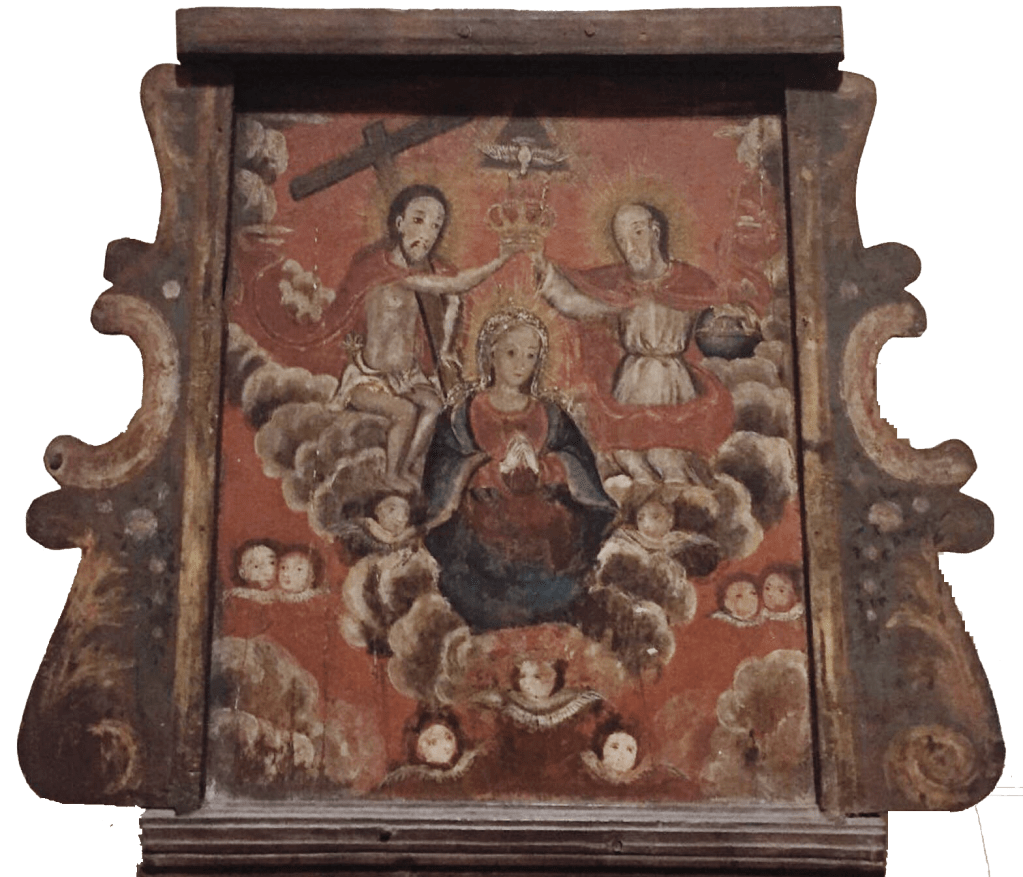
LA CORONACION DE LA VIRGEN
by Isidro Arceo
also known as The Coronation of the Virgin. This artwork was made during the 19th century and is painted with oil on canvas. An oil painting of the Virgin Mary crowned by Jesus and God the Father. God the Holy Spirit is in the form of Dove. A pair of holes in the horizontal panels on top and below suggest that a pair of doors that is now missing open to reveal this centerpiece. The face on the painting is not quite detailed. The eyes are just dotted, the body is not detailed into its tiniest details a body should have. The painting also used primary colors to give life. The angels are well distributed into the painting and there is no much blank space and is well all occupied. I also think that the texture is rough due to its color. The movement is also presented by the clouds going upwards.
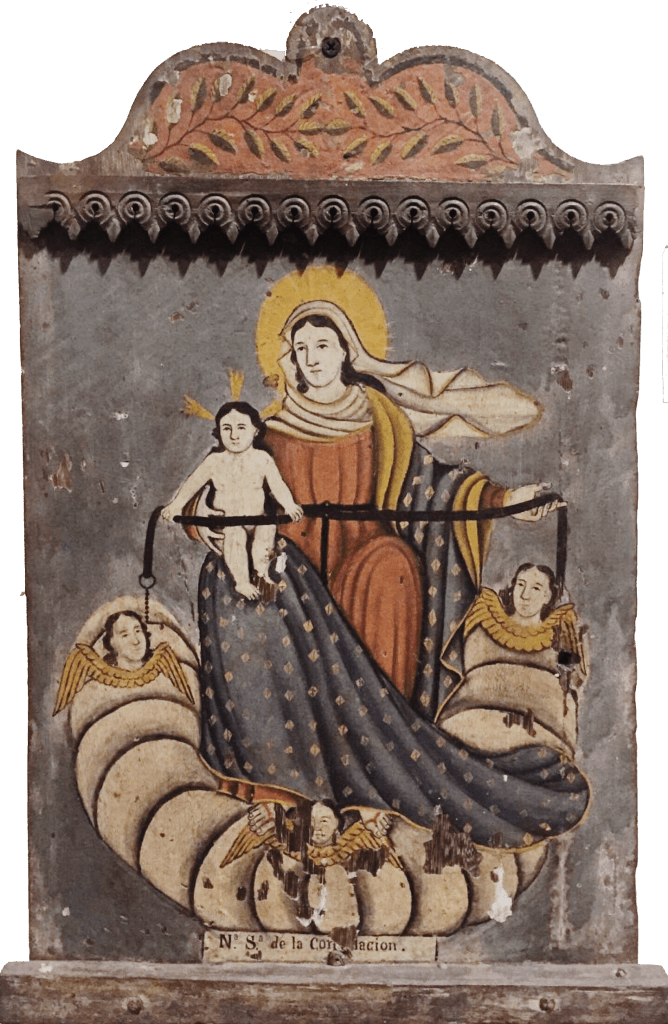
NUESTRA SEÑORE DELA CONSOLACION
An icon the Virgin and Child seated on clouds. Her red garment is worn underneath a blush gray cape decorated with diamond shapes painted in goldleaf. She and the Child Jesus holds the black cincture. The painting was painted on wood, it is unique that the wood has created with design that may add to the beauty of the painting. Primary colors is presented and used to convey message of the painting. Blue represents Mary as her holiness. Although the clouds does not look as usual clouds. I also think the texture is rough because it was painted on wood. The veil of Mary looks like its moving because of how the veil looks carried out by the wind.
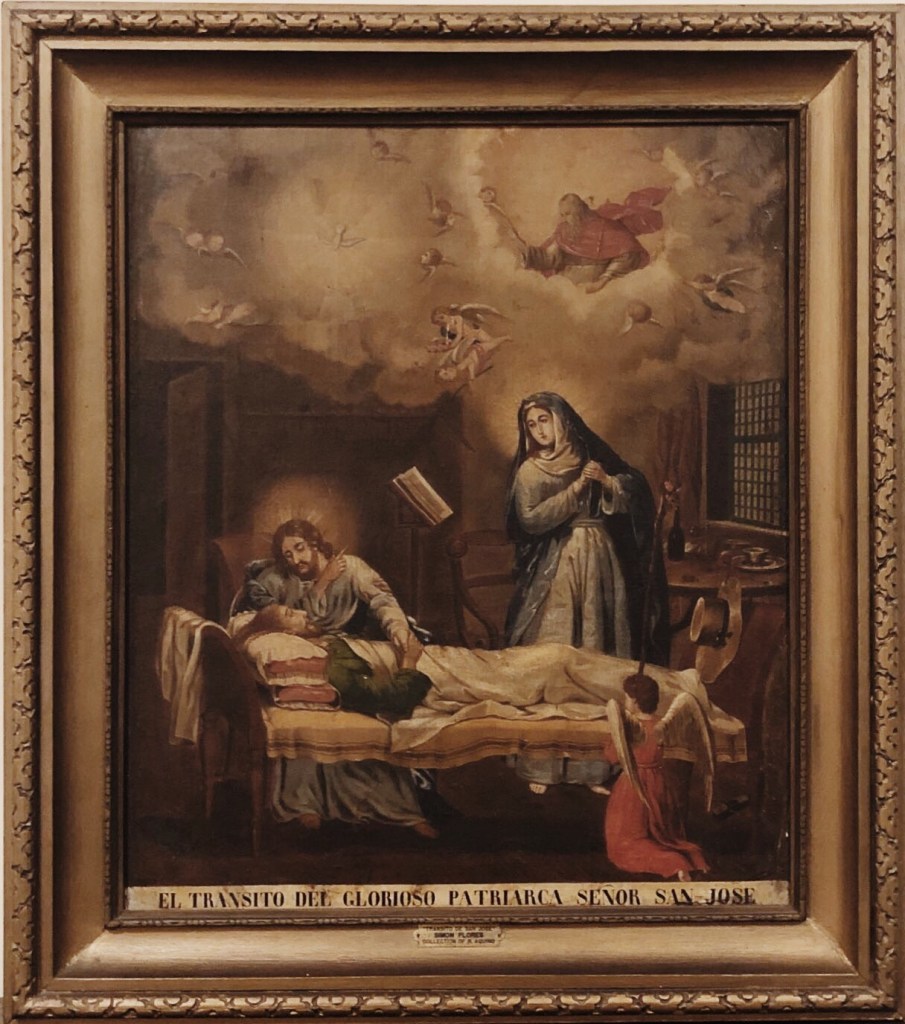
EL TRANSITO DE SAN JOSE
by Simon Flores y dela Rosa
This painting located at the Museo de Intramuros is made from oil on canvas with dimensions of 29 ½ x 2 ½ x 33 ½ inches. It is also known as the Transition of Saint Joseph. The artist, Simon De La Rosa, was from a family of artisans from Balayan, Batangas.
In the painting itself, we can notice that it depicts Christ, Mary, and Joseph wearing clothes that reminds viewers of the garments in the biblical times. The setting of the painting is a typical Filipino household with details given to the furnishings of their clothes, the bed sheets, and the pillowcases. The chair and the circular dining table was also noticeable behind the character of Mary. Adding to the very Filipino detail, there is also a capiz window on the right side of the painting.
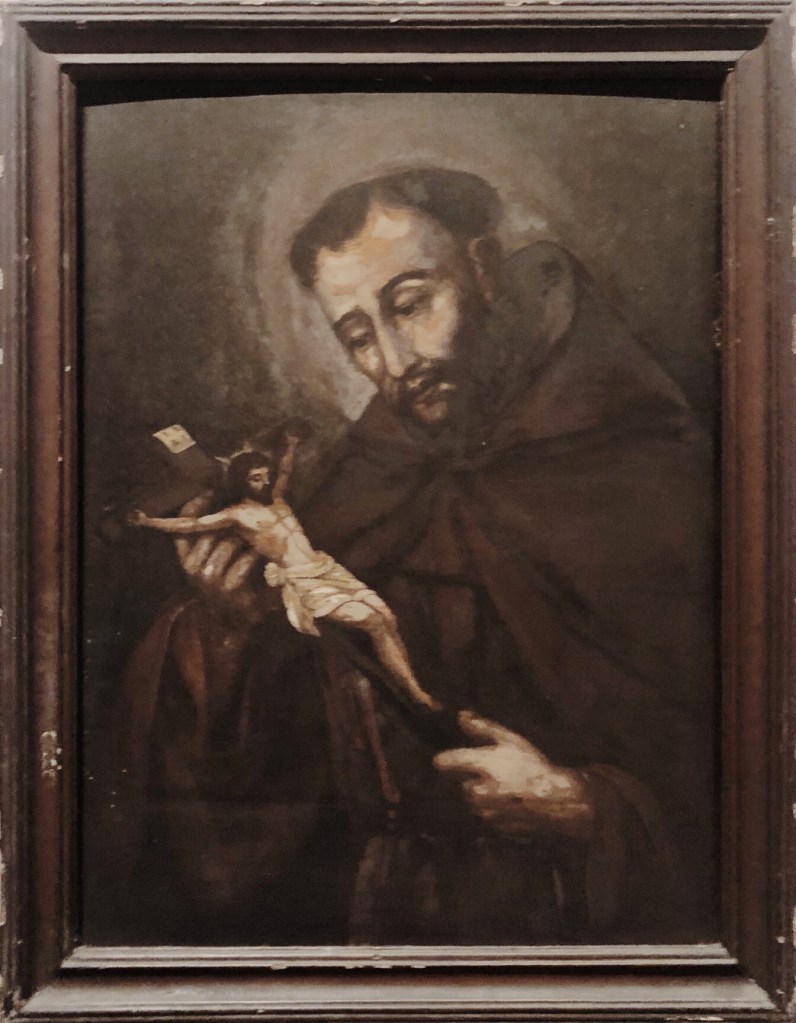
SAN IGNACIO
The artwork was made during the 19th century and it is painted with oil on canvas. He is the patron saint of the Basque provinces. And was declared patron saint of all spirituals retreats by Pope Pius XI in 1922.
The painting is detailed, it shows how San Ignacio looked back then. You can see he is holding a bible and a thing that looks like a stand with a cross on top of it. The hands are well structured in the painting. The eyes are detailed into its tiniest details. The painting used colors that are light and dark. San Ignacio looked serious in this painting. And no space was left without a paint.
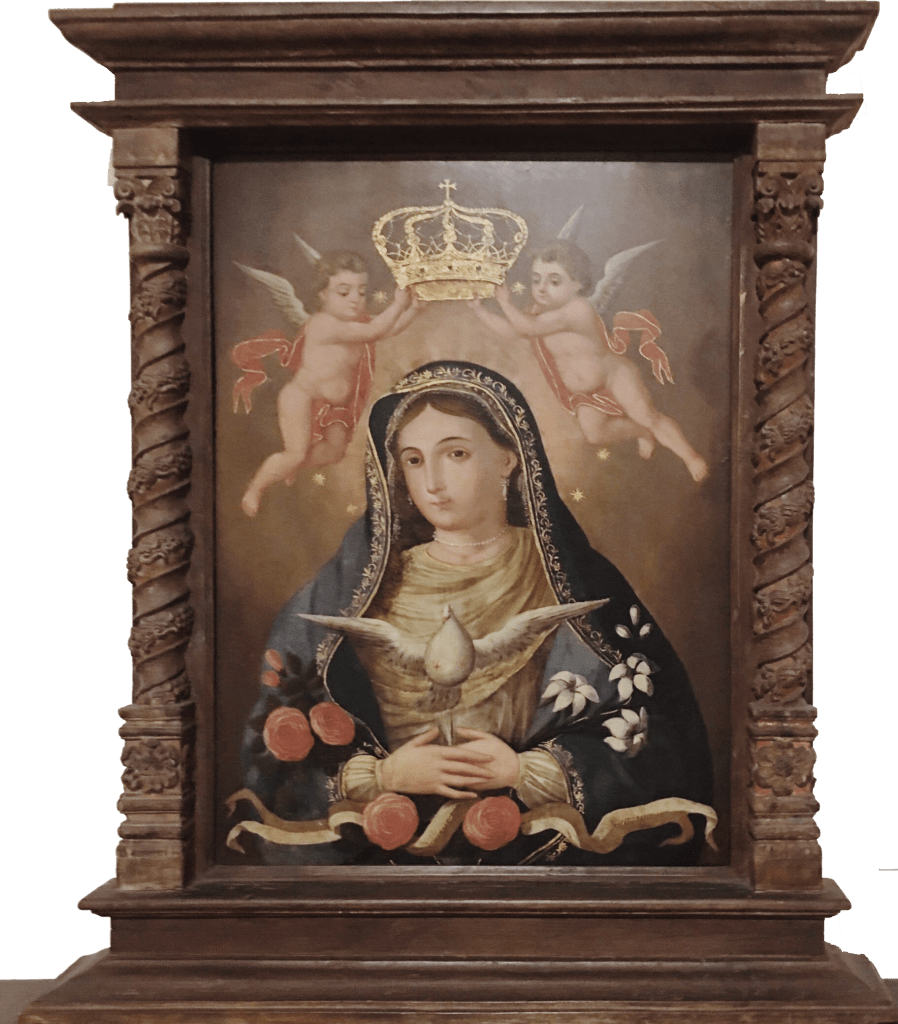
NUESTRA SEÑORA DE LA PALOMA
Our Lady of Dove was Created by Simon Flores Y dela Rosa. The Virgin wears a white dress and a blue mantle decorated with floral and foliate design in Goldleaf. A white dove with outspread wings is painted at the center of her chest. The size of the painting is 27 3/4x 3 3/4x 33 inches. Museo de Intramuros preserves this painting.
The painting shows creativity and the usage of different type of colors. It terms of brightness, it showed the crown. There are also negative spaces on the painting behind the angels holding the crown. The line were used to seperate Nuestra from the angels. The painting also emphasize the dove holding by Nuestra. The body of the angels and even Nuestra is proportion like an ordinary woman and a baby. The artist used the negative space to contrast the characters.
THE AUTHORS




CABIGTING, Rain Kim
DAVID, John Ernest Matthew
FLORINDO, Bryan Emil
MOJICA, Maeane Michelle
SORIA, Alyssa Mae
 ARTCCOUNTANTS