The Philippines is considered as a Catholic country because the large percentage of Filipinos are Catholics. Thus it is not surprising that our country is filled with numerous churches and most of them are considered national treasure because of their historical and cultural value. In this adventure we will visit some of these churches that are filled with stories in its walls and examinees’ the artistry behind their magnificent architectures.
All of the churches we will visit is part of the Archdiocese of Manila one of the earliest and primary congregation of catholic churches in the country. These churches are built dated back from the colonial period of Spaniards and still standing firm until today.
- Ermita Shrine
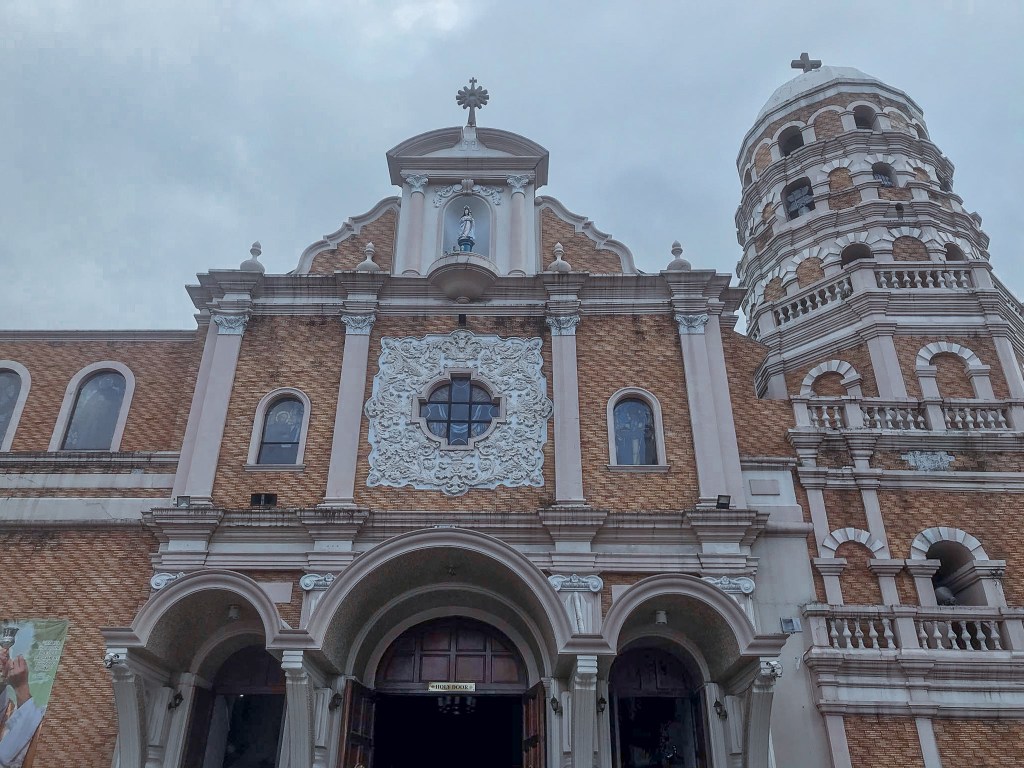
First stop is the Archdiocesan Shrine of Our Lady of Guidance, also known as Ermita Shrine or Ermita Church (Spanish: La Ermita de Nuestra Señora de Guía). It is a shrine located in the district of Ermita in the City of Manila, Philippines. The church is home to the Marian image of the Immaculate Concepcion known as Nuestra Señora de Guía, which is considered to be oldest in the Philippines, and in whose honor the church is officially named after and dedicated to.
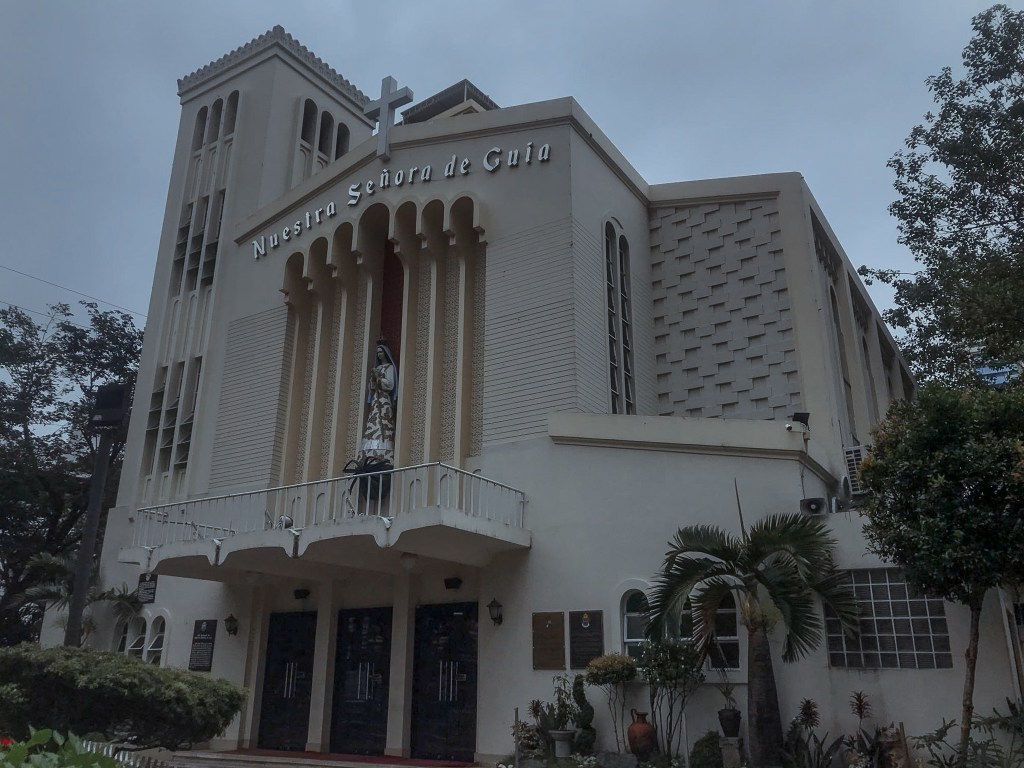
The church began as a rustic shrine made of bamboo, nipa, and molave wood that was built to house the image of Our Lady of Guidance in the area where it was found in 1571. The church was damaged many times due to earthquakes. In addition, the image had to be transferred to the Manila Cathedral for safekeeping during the British occupation of Manila in 1762–1764. A more permanent stone church was built in 1810; the image was returned to the church in 1918. On December 3, 2005, Manila Archbishop Most Rev. Gaudencio B. Cardinal Rosales, DD elevated the status of this church to an archdiocesan shrine.
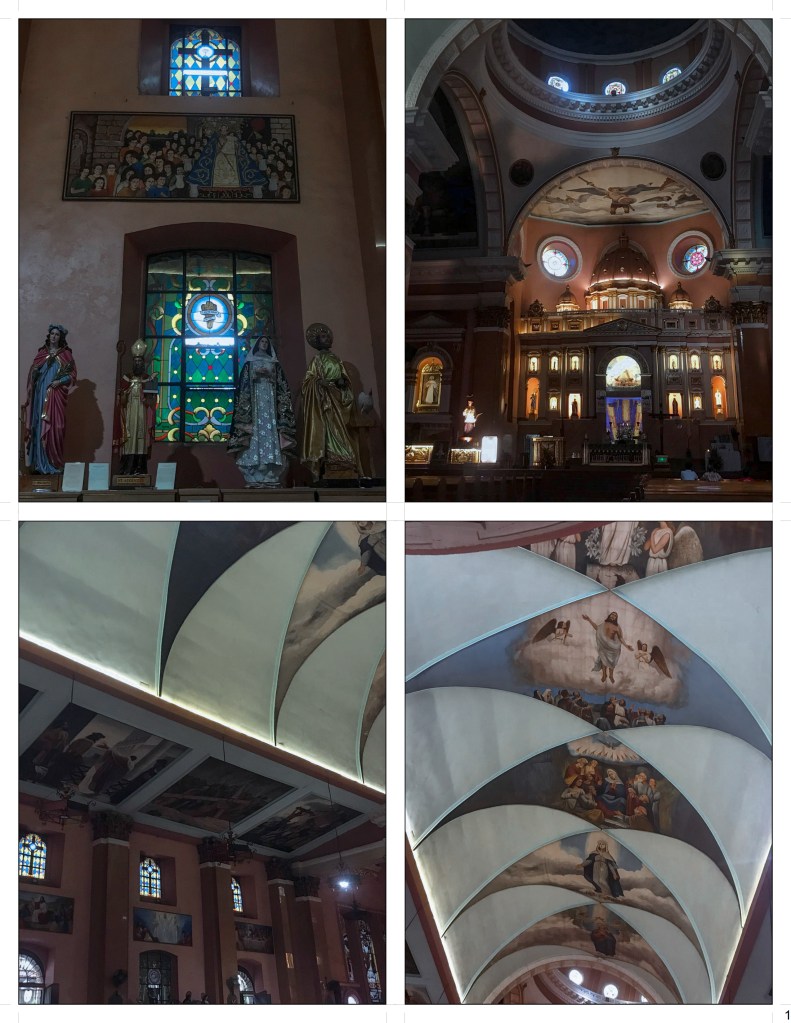
From the outside you could see a large image of the Virgin in the beautiful façade. Inside is a collection of beautiful murals painted on the ceiling. The one that really standouts is the large altar where the Our Lady of Guidance is enthroned. The simplicity of the structure provides a good place for worship as well as highlighting the solemnity and sacredness of the church. In addition, there are also several sculptures of religious figures inside the church that conforms to the tradition of the Catholic religion.
Source:
Roces, A.,(2018).Ermita church now mother of all shrines. Retrieved from:https://www.google.com/amp/s/www.philstar.com/opinion/2005/12/24/313514/ermita-church-now-mother-all-shrines/amp/
- Manila Cathedral
The Minor Basilica and Metropolitan Cathedral of the Immaculate Conception (Filipino: Basilika Menore at Kalakhang Katedral ng Kalinis-linisang Paglilihi; Spanish: Basílica Menor y Catedral Metropolitana de la Inmaculada Concepción), also known as Manila Cathedral, is the cathedral of Manila and basilica located in Intramuros, the historic walled city within today’s modern city of Manila, Philippines. It is dedicated to the Immaculate Conception, a title for the Blessed Virgin Mary, the principal patroness of the country. The cathedral serves as the episcopal see of the Archbishop of Manila.
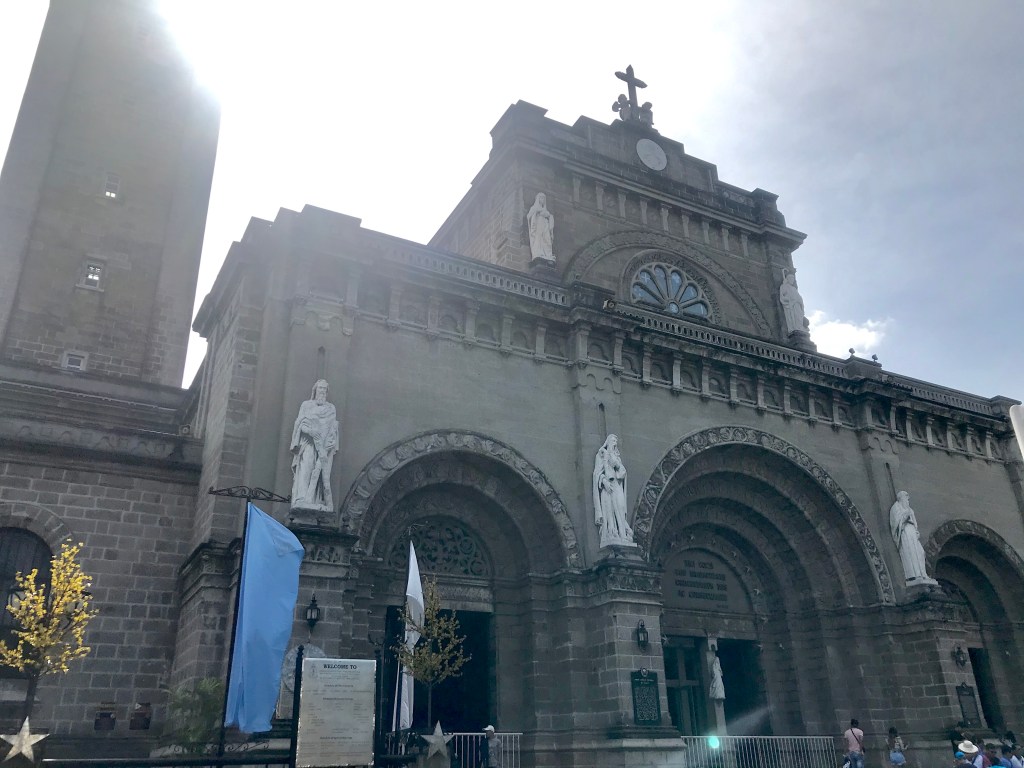
It was founded on 1571 by Fray Juan de Vivero. The year was 1521, as Ferdinand Magellan set foot in the Philippines, it marked the arrival of Catholicism in the Philippines. The Spanish colonization paved way for the spread of Christianity and the era of western church architecture in the Philippines. During the three centuries of colonization it produced grandly design churches; one of these is the Manila Cathedral.
The formal reopening of the Church happened last April 9, 2014. On January 16, 2015, Pope Francis celebrated his first Papal Mass in the country at the cathedral as part of his apostolic visit to the Philippines. The mass was celebrated for the bishops, priests, and the clergy in three languages: Latin, English, and Filipino. The patron saints of Manila Cathedral are Saint Rose of Lima and Saint Potenciana.
The architect of Manila Cathedral is Fernando H. Ocampo, Sr. The groundbreaking happened last 1954. The Neo-Romanesque-Byzantine cathedral has long been the seat of archbishop in the Philippines.
The northwest façade is a replica of the façade of the previous cathedral, along with statues of famous saints sculpted in Roman travertine stone. Several of the artworks inside the basilica were made by Italian artists. In the previous cathedral, they were originally made of molave wood. The statue of Saint Rose of Lima was sculpted by Angelo Fattinanzi while Saint Jacob, Saint Andrew, and Saint Anthony the Abbott were by sculptress Livia Papini. The statues of Saint Francis Xavier and Saint Polycarp were done by Alcide Tico.
The tympanum above the central northwest doors bears the Latin inscription Tibi cordi tuo immaculato concredimus nos ac consecramus (English: “To thy Immaculate Heart, entrust us and consecrate us”).
The papal arms were added in 1981 to signify the cathedral’s status as a basilica.
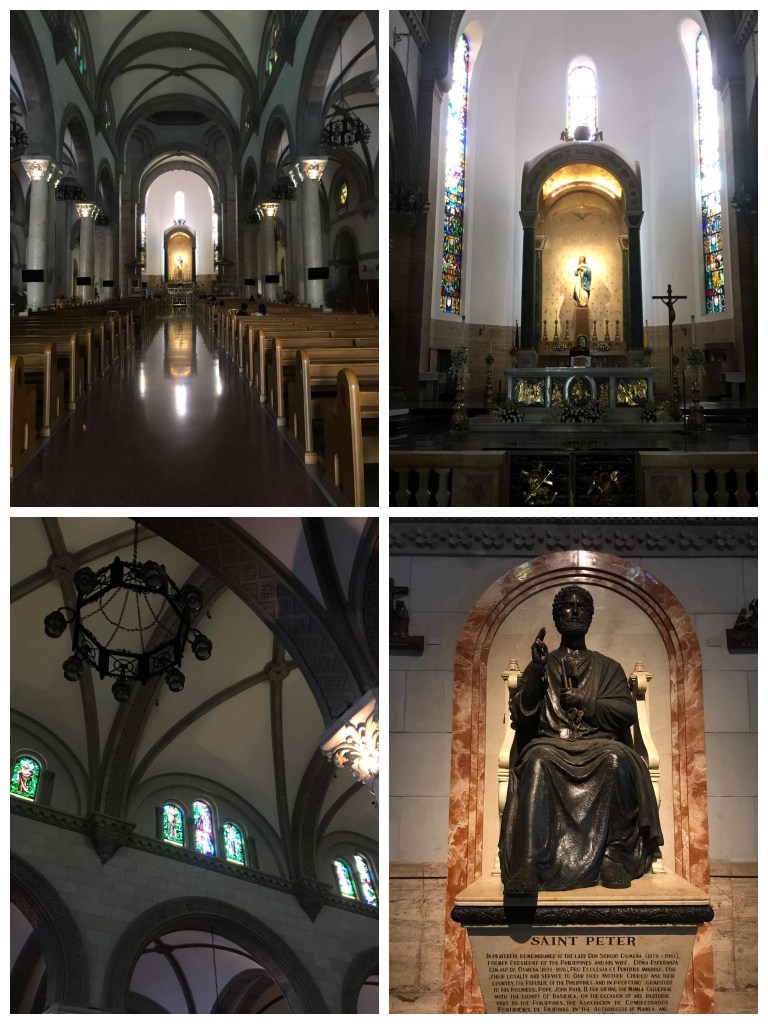
Since Pope John Paul II’s apostolic visit to the basilica in 1981, a medallion bearing the Papal arms has been placed beneath the cross on the northwest end. The red galero hat of Cardinal Rufino Santos is also suspended from the ceiling of the dome. In addition, a copy of Saint Peter’s statue (attributed to Arnolfo di Cambio) is enshrined inside, across a polychrome life-sized statue of the Immaculate Conception.
Prior to 1988, the bronze statue of the Immaculate Conception in the main altar, by national Italian sculptor Vincenzo Assenza, was painted gold until 1988 (though the twelve star halo-aureola is solid gold).[23][24] Inscribed on the baldachin above the statue of the Immaculate Conception is the Latin antiphon Tota Pulchra es Maria et Macula Originalis Non est in Te (English: “Thou art all-beautiful, Mary, and the original stain [spot] (of sin) is not in thee.”).
The baptismal font and angel-shaped holy water fonts are also made of solid bronze by Publio Morbiducci; the prominent mosaic of Saint Jude Thaddeus was made by Marcello Mazzoli. The 134 modern stained glass windows were made in 1964 by Filipino artist Galo Ocampo. The window set, which was a programme of Marian themes, was commissioned and funded by Cardinal Rufino Jiao Santos.
The artistic designs of the stained glass windows of the Manila Cathedral are mostly products of the creative genius of Ocampo, one of the most versatile contemporary Filipino artists during his time and a recipient of the 1964 Patnubay ng Sining at Kalinangan Award from the city government of Manila.
From Ermita Shrine you will traverse the Rizal Park until you reach the Walled City of Intramuros. Inside you will walk down the historic street of Muralla and Beaterio.
Source:
http://manilacathedral.com.ph/about_us
http://www.artesdelasfilipinas.com/archives/117/the-history-of-the-manila-cathedral
- Binondo Church
As we continue our journey we will now enter the famous Chinatown in Binondo, Manila where the culture of Filipinos and Chinese were fused and enriched by time. The hospitable attitude to the Chinese by the early Spanish colonists became an incentive for the former to increase their trade to Manila. Soon enough, there was an upsurge in their population. The difficulty came when the missionaries realized that aside from the natives, they had to manage the conversion of the Chinese population. This prompted the church headed by Bishop Domingo de Salazar to issue an appeal for the religious orders (there were three in the colony that time) to Christianize these pagans. But due to lack of personnel and difficulty in learning the Chinese language, the request was turned down. The Minor Basilica of St. Lorenzo Ruiz is located at Ongpin Street and Quintin Paredo Road and at the edge of the Plaza San Lorenzo Ruiz in Binondo, Manila. If you want to come and visit the church you may ride Lrt, Jeepney or Bus near you and it is easy for you to find since it was only located near the road where public and private vehicle comes along.
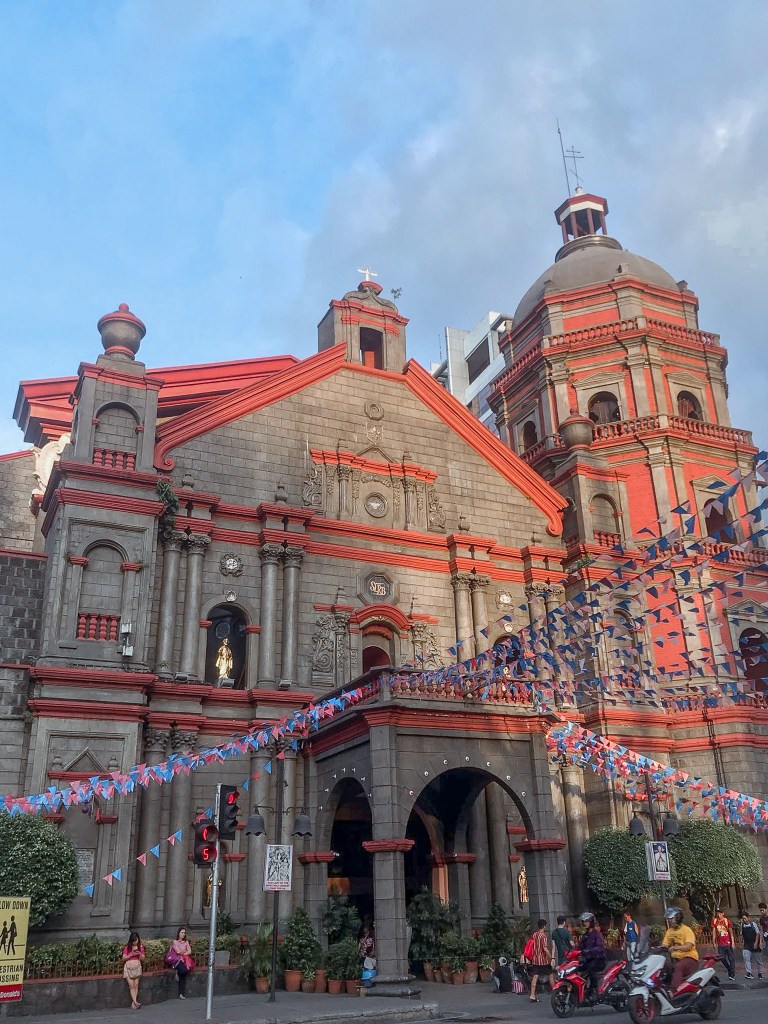
The Minor Basilica of San Lorenzo Ruiz, Binondo church was named after the sacristan, San Lorenzo Ruiz, who was born of a Chinese father and a Filipino mother. He was trained in this church then went to Japan as a missionary, where he was executed for refusing to renounce his religion. He was canonized in 1989. A large statue of the martyr stands in front of the church, being the first Filipino saint. The architectural style is Spanish or European Baroque and moreover it is notable for its octagonal five-tier Chinese-style bell tower which reflects the culture and art of the surround Chinatown. The most striking feature of the rebuilt interior is the more marble and gilded reredos depicting the facade of St. Peter’s Basilica in Rome. Before the war, it was considered as one of the most beautiful churches in the country. Its bell tower was composed of five stories, octagonal in shape. At its top was a mirador (viewing window). The roof behind the pediment and the walls at the left of the facade are additions in the past years. The original facade, with some few renovations, is similar to that of the Italian High Renaissance churches. The facade is buttressed on the sides by pilaster mass terminated by urn-like decorations. A tower is found at the apex of the pediment. At the base of the pediment, along its central axis, is a small circular window framed by smaller columns and pediment which are framed by a foliated scroll. At the right is the huge, octagonal tower characterized by cantons at its angles and pedimented window openings.
Trivia:
- The altar of the church is loosely modeled after the St. Peter’s Basilica in Vatican City.
- Binondo Church has been reconstructed many times due to natural calamities and only the Bell Tower is what remained of the original 16th century structure, it has retained the classic architecture that makes the place a wondrous sight for the most unforgettable occasion.
- Andres Bonifacio and Gregoria de Jesus were married through a Catholic ceremony in Binondo Church in March 1893 or 1894.
Source:
Dacumos, J., (2012), Minor Basilica of St. Lorenzo Ruiz – Binondo Church. Retrieved from: https://www.vigattintourism.com/tourism/articles/Minor-Basilica-of-St-Lorenzo-Ruiz-Binondo-Church
Wagner, D. P., (2018) Binondo Church. Retrieved from: https://www.fabulousphilippines.com/binondo-church-manila.html
- Sta Cruz Parish
Next stop is the Our Lady of the Pillar Parish Church, commonly known as the Santa Cruz Church and also designated as the Archdiocesan Shrine of the Blessed Sacrament. It is s a baroque Roman Catholic parish church in the district of Santa Cruz, Manila, Philippines. It was built when the arrabal (suburb) of Santa Cruz was established by the Jesuits in the early 17th century. The church had undergone many repairs and reconstruction, with the last reconstruction done in the 1950s. It is the first Mission and Mother house of Filipino Sacramentinos, making it as the center of Congregation Activities and events. The Santa Cruz Parish Church is located in Santa Cruz District, Manila. Originally erected in the Spanish era to cater to the spiritual needs of Chinese Immigrants in Manila. Here are to go using public transportation.
If you are coming from Monumento or Baclaran Area: You may ride the LRT-1 and alight off at Carriedo Station. From there, you can just walk going to the Santa Cruz Parish Church. If the LRT-1 is not available you may also ride a Jeepney going to Carriedo. If you are coming from Antipolo, Rizal Area: You may ride the LRT-2 and alight off at Recto Station. From Recto, you may walk going to AVENIDA and from there, look for Jeepneys bound to Baclaran, Pier, Mabini or SM Manila. Ask the driver to drop you off at Santa Cruz Parish Church.
It is currently under the jurisdiction of the Archdiocese of Manila, and is being administered by the Congregation of the Blessed Sacrament. The Congregation is founded by St. Peter Julian Eymard. The church facade is characteristically Baroque with Ionic piers vertically dividing the first two levels in three parts. Three semicircular arch doorways form as main entrance to the church. A Celtic-like window flanked by small semicircular windows is found at the center of the second level. Forming as the pediment, the topmost level has its raking cornice in undulating liens emanating from the broken pediment found above the statued niche. The domed belfry rises on the right in six levels.
The original structure of the church was twice damaged by earthquakes and then completely destroyed during the Battle of Manila. The present building of the church, reconstructed in 1957, was designed to reflect the Spanish baroque style.
Source:
https://en.wikipedia.org/wiki/Santa_Cruz_Church_(Manila)
http://philippinecatholicchurches.blogspot.com/2014/03/santa-cruz-parish-church-manila.html
- Quiapo Church
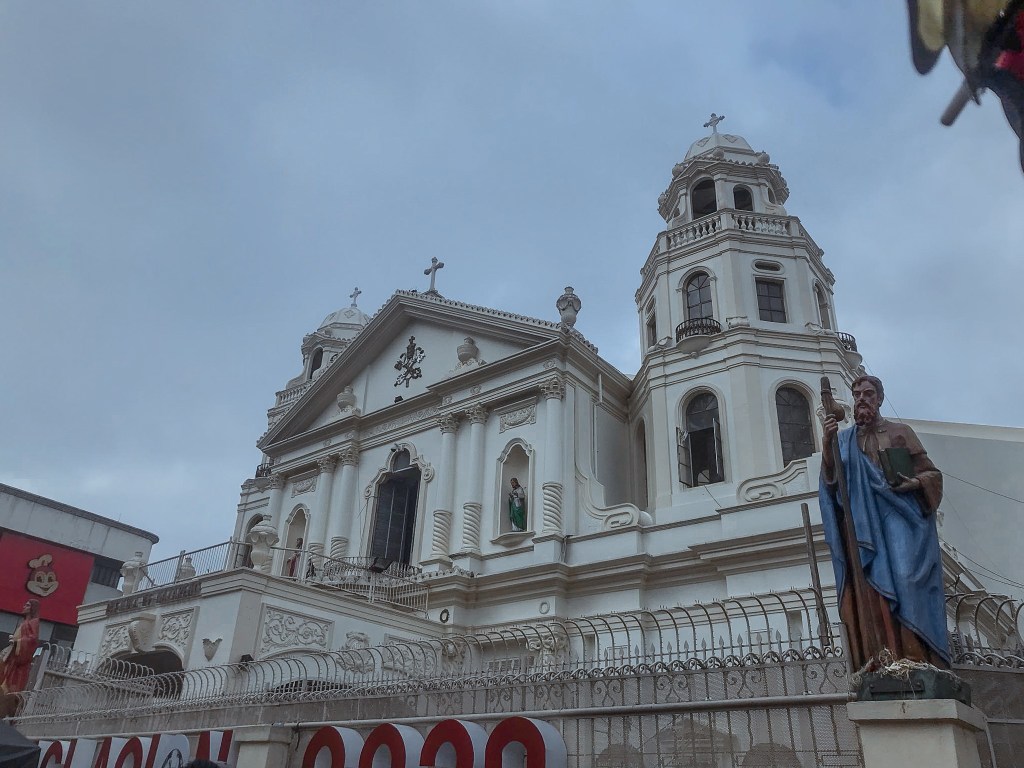
One of the church that is included in our itinerary is the famous Quiapo Church in Manila where the miraculous image of the Black Nazarene is situated. The Minor Basilica of Black Narazene was built in 1586 by the Franciscan order of the Roman Catholic Church. The first Quiapo Church was built on the same site as where we see the today’s church of the same name. It was constructed using a frame bamboo and thatching out of nipa palm. This church was burnt down in 1639. A second Quiapo Church was built on the same site. Though the building was stronger, it was destroyed in the powerful 1863 earthquake. A third Quiapo Church was built, with construction being completed in 1899, only to be almost completed destroyed by fire just decades later – in 1928. The fourth (and current) Quiapo Church was then built in the Mexican Baroque style. A second belfry and a dome were added to the design. Quiapo Church is located at 363 Quezon Blvd, Quiapo, Manila, 1001 Metro Manila.
The easiest and most comfortable way to commute going to Quiapo is through the Light Rail Transit (LRT).
If you are commuting using the Light Rail Transit (LRT) line 1, and you are coming from the south of Metro Manila e.g. Paranaque, Sucat, Alabang, Muntinlupa, etc., you should get to any station of LRT1 and ride a Monumento or Roosevelt bound train. Get off the train as soon as you get to the Carriedo station. Same way for those coming from north of Metro Manila like Navotas, Malabon, Valenzuela, Caloocan, Novaliches and other nearby areas. Take LRT1, specifically a Baclaran bound train and get off at Carriedo station. From Carriedo station, you will get to Quiapo Church by walking eastward.
If you are commuting using the Light Rail Transit (LRT) line 2 and you are coming from any station, anywhere from Santolan station, you just need to get off at Recto station that is the last station of LRT-2. From there you just need to walk toward the corner of C.M. Recto and Quezon Boulevard where you will see the Isetann Mall. From the Isetann Mall you walk southward to get to the Quiapo Church.
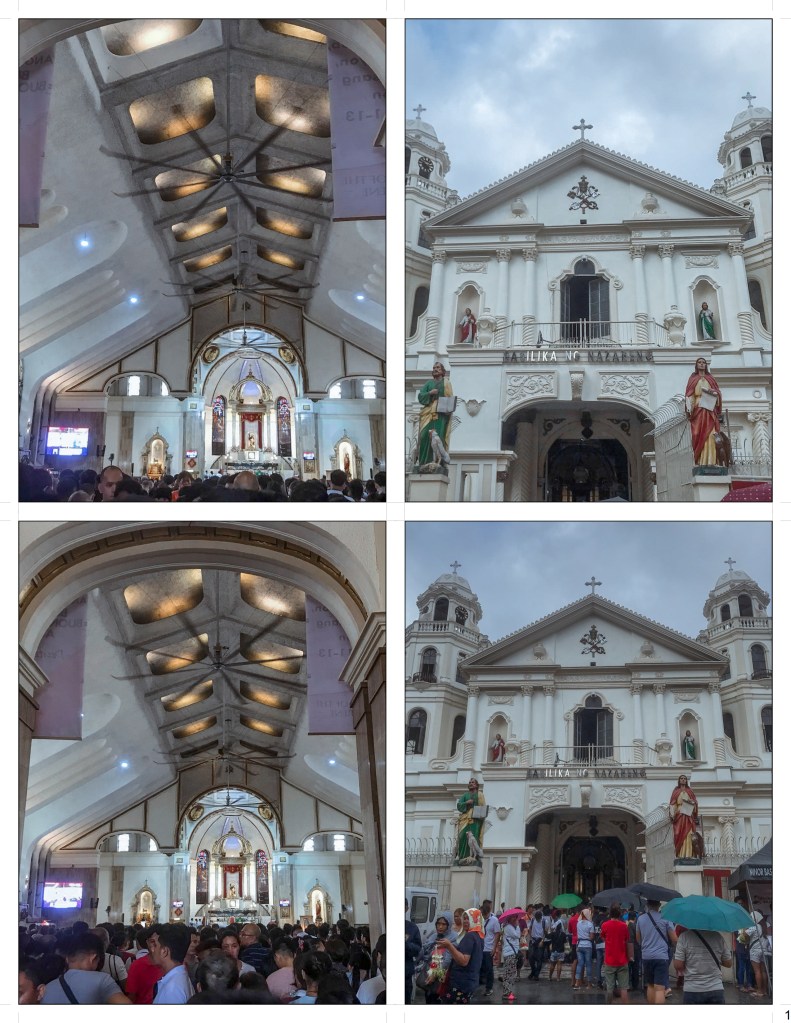
Quiapo Church was built in the Baroque style, Quiapo Church’s façade is distinctive with twisted columns on both levels. The Corinthian columns of the second level has a third of its shaft twisted near the base, while the upper portion has a smooth surface. The topmost portion of the four-storey belfries are rimmed with balustrades and decorated with huge scrolls. The tympanum of the pediment has a pair of chalice-shaped finials, and towards the end of the raking cornice, urn-like vases mark the end of the pediment. A quatrefoil window in the centre of the pediment was sealed up in the late 1980s and replaced with a relief of the crossed keys and tiara of the pope – a symbol of its status as a minor basilica.
Source:
https://quiapotoday.wordpress.com/traditional-beliefs/trip-to-quiapo/
- San Sebastian Church
The last church on our list is the San Sebastian Church also known as the Minor Basilica of San Sebastian is completed and inaugurated in 1891 it was inspired by the Gothic Revival Architecture, it is the only steel building church in the Philippines. It was designated as a National Historical Landmark in 1973. It is located at Pasaje del Carmen St, Quiapo, Manila, 1001 Metro Manila
From Intramuros bind the Manuel L. Quezon bridge bound to quiapo manila. Then walks towards the FR Hidalgo St. after that turn right way to San Rafael St. then walk through Nepomuceno St. and you should immediately see a light blue gothic church.
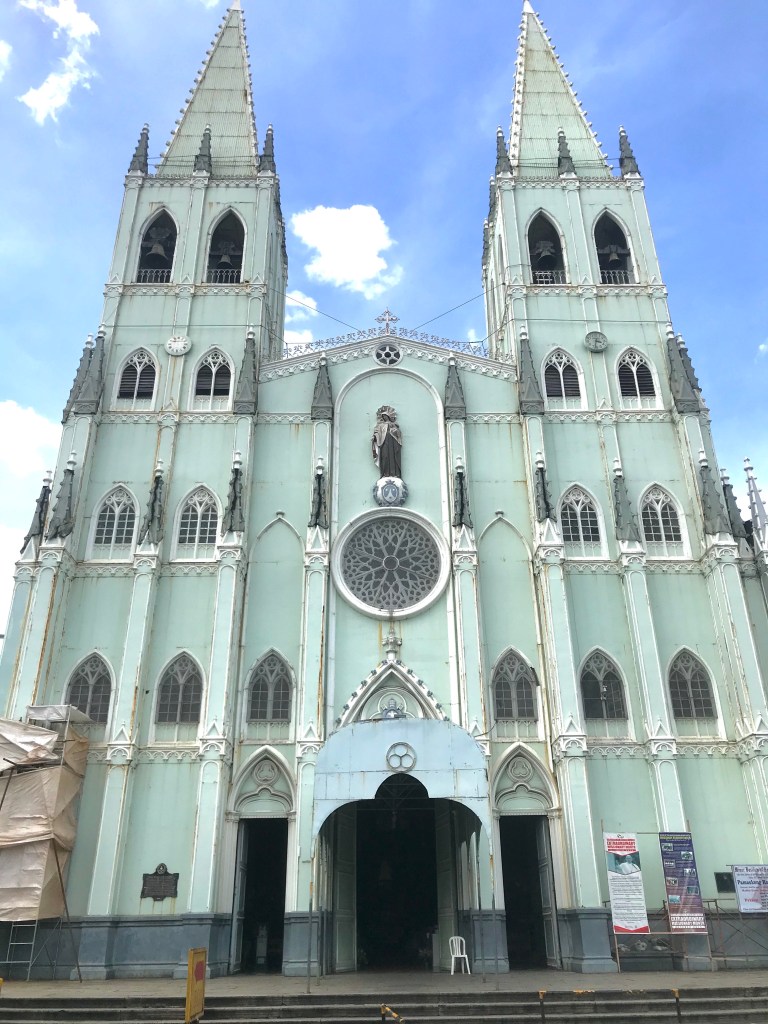
St Sebastian is a Christian saint and martyr. In Roman Catholicism, Sebastian is the patron saint of athletes as well as the patron saint of archers. He is commonly depicted in art and literature tied to a post or tree and shot with arrows. The artistic depiction of St Sebastian is considered symbolic of the virtues and gifts of strength, stamina, perseverance, courage and justice in the face of adversity.
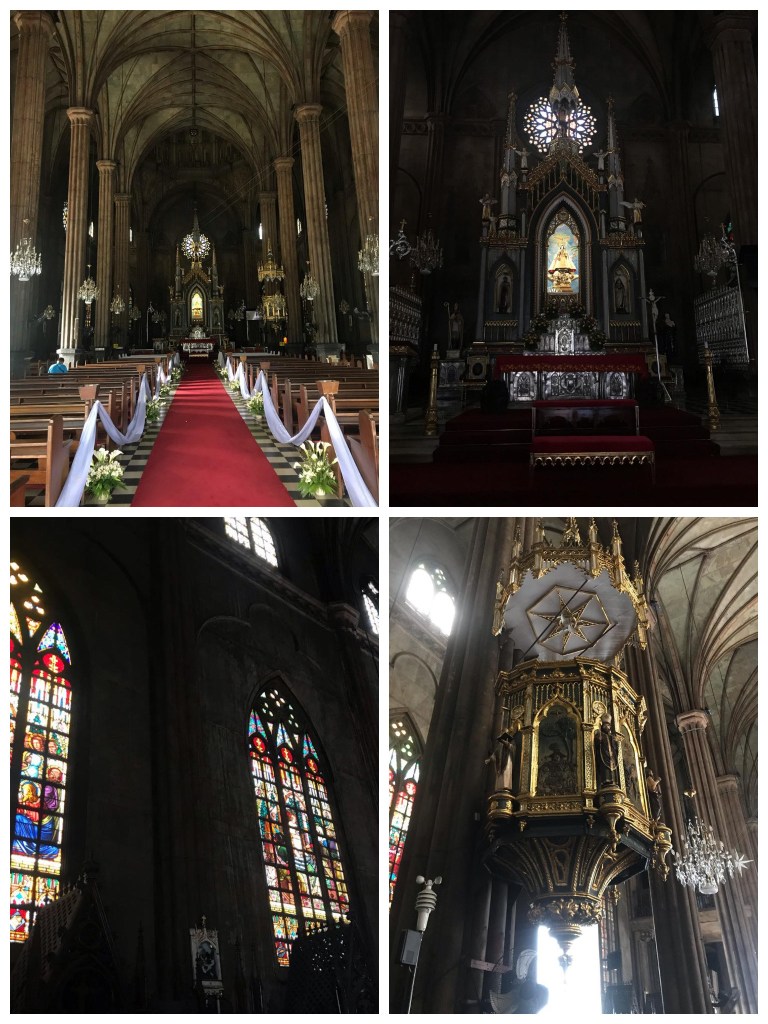
The church was a prefabricated steel sections were manufactured in Binche, Belgium. The interior of the basilica are made of exquisite groined vaults, a true Gothic architecture-style. Confessionals, pulpit, altar and retablos represent fine Gothic revival, which were headed and designed by Professors from the Academia de Pintura y Dibujo, Lorenzo Rocha and Lorenzo Guerrero. The vaults display intricate trompe l’oeil paintings of saints and several religious figures, an art approach where the images create optical illusions.
In addition, the land upon which the church stands was said to be donated by Don Bernardino Castillo, a devotee of Saint Sebastian. The first church was made of wood and was burned down during an uprising the mid-16th century. Bricks were used to rebuild the succeeding structures which were then destroyed by earthquake and fire from the mid to late 18th century. The parish priest of the ruined church, Esteban Martinez, came to Spanish architect Genaro Palacios with a plan to build a church is both fire and earthquake resistant.
In the Philippines one of the best place you can visit if you want to satisfy your eyes and at the same time to enriched your mind with knowledge about our past and culture, its no other than the National Museums specifically, the National Museum of Fine Arts. It is home to numerous collections of artworks dated from centuries ago up to our contemporary times. In this place you can visit a numerous galleries filled with artworks and masterpieces of Filipino artist. Every room and hallways express different emotions, narrates different stories and even gives off a different atmosphere. From the lobby where the magnificent Spolarium by Juan Luna that welcomes you up to the uppermost gallery, satisfaction will never fade.
In this journey you could see a glimpse of what are the things that awaits you as you visit the museum.
Source:
https://www.vigattintourism.com/tourism/articles/Basilica-of-San-Sebastian-in-Manila
- Via Crusis, The Stations of the Cross
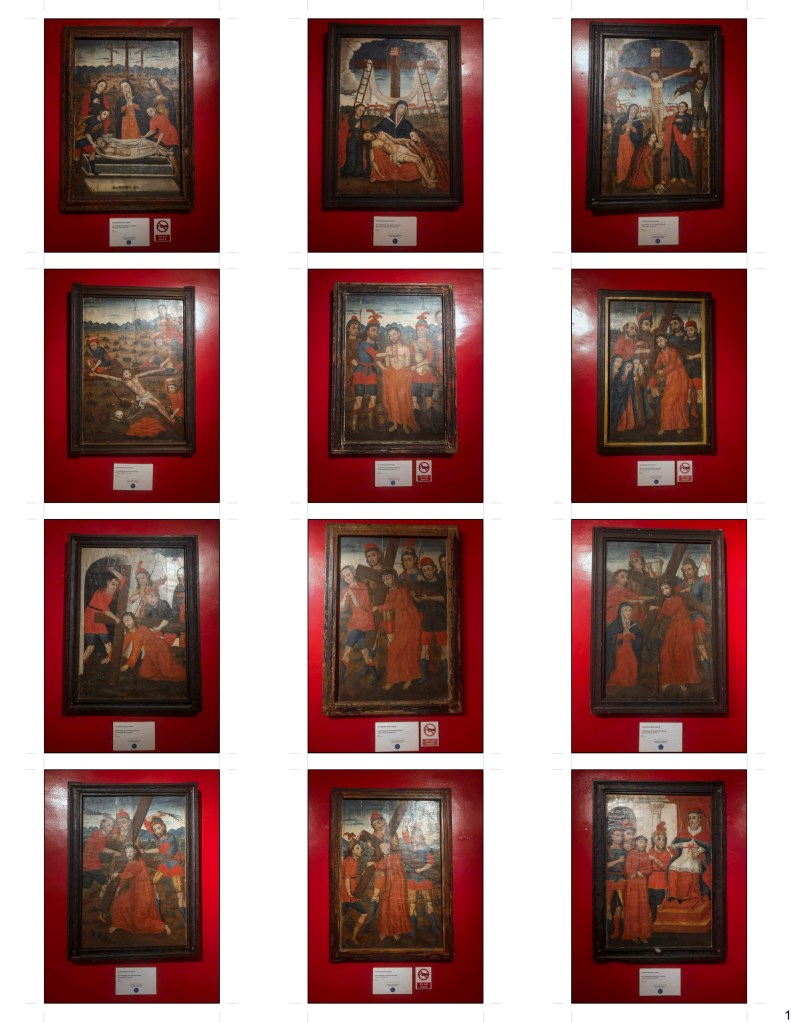
Unknown Bohol Artist, 1830
Situated on the second floor of the museum is a large gallery full of historical religious relics that where found and became part of the museum’s collection. One of which is a group of paintings that portrays significant events in the Passion of Christ, from his condemnation by Pontius Pilate to his entombment – The Station of the Cross, Via Crusis. Each of the 14 paintings was displayed around the room. These paintings where retrieved in a local parish in the province of Bohol. Unfortunately, until today the skilful painter who worked for this pieces was not yet known.
As you go around the gallery and carefully look on each of the painting you can observed the similarities of all, wherein they are all resembling other work of arts especially those of which are painted during the medieval age. During this era the most of the artworks especially paintings are flat or 2-dimensional, mostly are religious in nature and used colors to portray certain meanings such as power, immortality and holiness. Furthermore, as you observed most of the paintings used dark colors and value because the events portrayed in the paintings are expressing sorrow, grief, and death.
The following are the events included in the Way of the Cross:
1st Station: Jesus is condemned to death
2nd Station: Jesus carries His cross
3rd Station: Jesus falls the first time
4th Station: Jesus meets his mother
5th Station: Simon of Cyrene helps Jesus carry his cross
6th Station: Veronica wipes the face of Jesus
7th Station: Jesus falls the second time
8th Station: Jesus meets the women of Jerusalem
9th Station: Jesus falls a third time
10th Station: Jesus’ clothes are taken away
11th Station: Jesus is nailed to the cross
12th Station: Jesus dies on the cross
13th Station: The body of Jesus is taken down from the cross
14th Station: Jesus is laid in the tomb
Sources:
https://www.britannica.com/topic/Stations-of-the-Cross
- The Virgin has Nothing to Sell
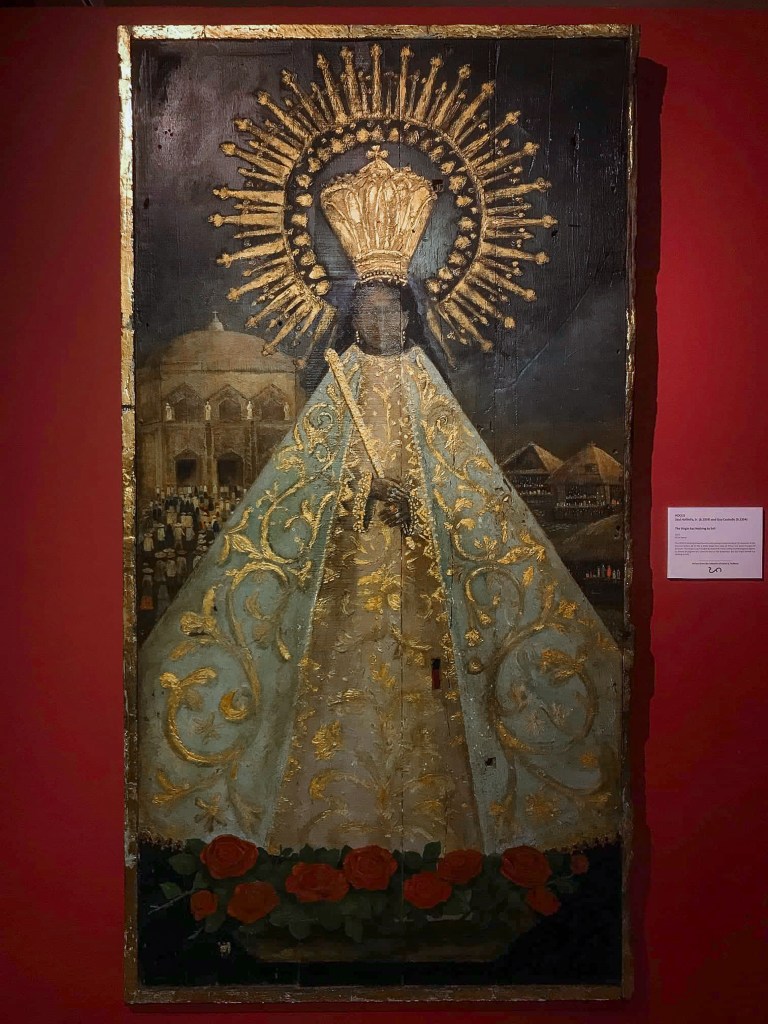
Saul Hofilena and Guy Custodio, 2018
At the uppermost floor of the museum is where the new addition in the museum’s collection is situated. The new gallery is entitled as “HOCUS” which is a combination of the names of the creator and benefactors of the art pieces found in the gallery namely Saul Hofilena and Guy Custodio. One of the artworks in the collection is a painting of the Virgin Mary – The Virgin has Nothing to Sell. It is an image of the Virgin Mary specifically, The Nuestra Senora de la Paz y Buen Viaje (Our Lady of Peace and Good Voyage) of Antipolo, Rizal. The interesting on the image is its backgrounds wherein it depicts how the unscrupulous make money on the devotion to the blessed image. The Virgin is surrounded by makeshifts stores selling myriad religious objects to crowds of pilgrims who come to ask for her protection. But the Virgin herself has nothing to sell.
As you look closely to the image you can easily recognized that the painting highlighted the sacredness of the blessed image of the Virgin Mary which implies that the Virgin herself does not need to offer anything for her to be trusted for the protection of the devotees. The color used in the image express the holiness and divinity of the image. On the other had the background has a darker tones of color which imply the negativity of those actions portrayed.
Sources:
https://www.nationalmuseum.gov.ph/nationalmuseumbeta/Museums%20and%20Branches/National1.html
https://www.nationalmuseum.gov.ph/nationalmuseumbeta/Collections/Fine%20Art.html
- Bondage
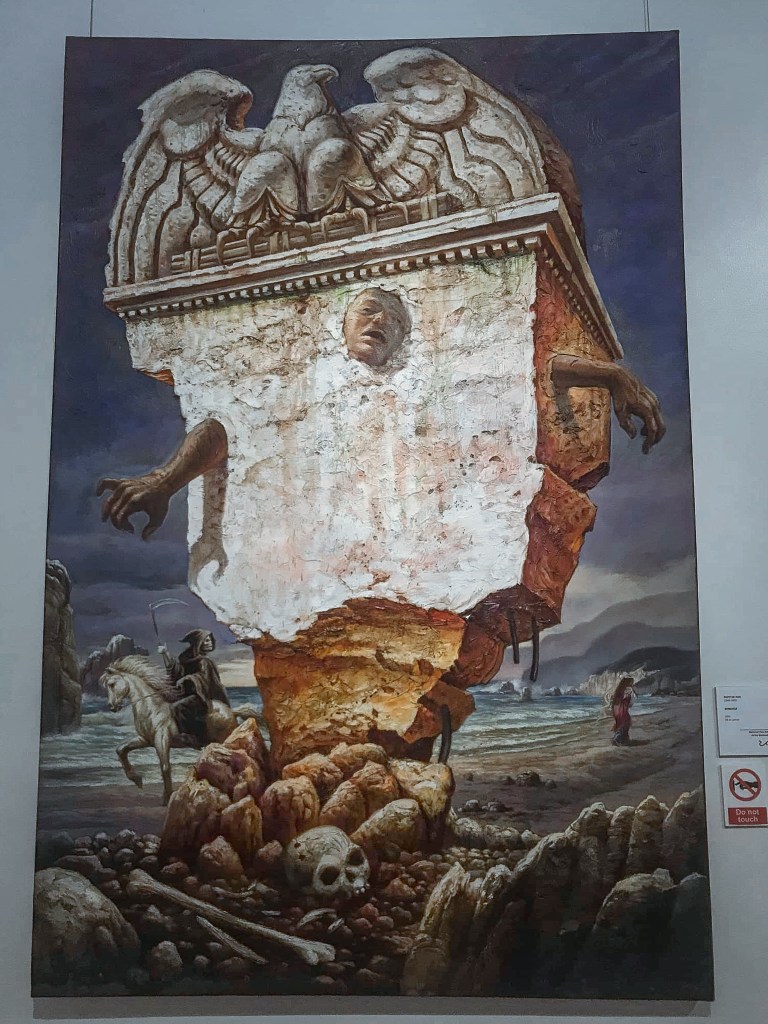
Papo De Asis, 1993
In this museum, the collection of artworks are not only limited to the four corners of the rooms or galleries. There are also art pieces such as paintings that are exhibited on the hallways. One of which is the painting of Papo De Asis, Bondage. It was painted in 1993, after the martial law, at a time which is relatively uneventful for the Philippines. The first thing you could easily noticed about the painting is the subject at the center. The main subject is a man buried in concrete. Scattered around it are smaller subjects such as the grim reaper, the woman, and the skull.
For this painting the artist used oil paint to cast the image to the canvas. The choice of medium does not speak a lot about the piece since it is known that oil is commonly used for paintings due to its durability against deterioration.
The elements of art are also observable in the artwork. For instance the used of different kind of lines highlights the different texture and emotions that can be felt from the painting. Through the lines you can feel the movement, fluidity, stiffness, hardness, sufferings and instability. Additionally, the used of colors help to easily distinguish the parts from one another. Lastly, the artist exquisitely imply the emotions to the public trough the combination of style and artistry.
Papo de Asis is a social realist who created socially conscious artwork since the 1970s. After martial law, his artwork transitioned into political events and he became an artist/activist. In one of his statements, released on November 1992, he said,
“It would be very difficult for an artist to probe into the depths of his soul and psyche, when the machination of half of his brain was forced into subjugation by the western colonial masters…the other half laid to a pitiful state of lethargy by “cultural amnesia. “Yet the need to express what to us is a constant source of torment and suffering remains a very painful necessity. For me, to express is to be free. For freedom is a fundamental element of life, art an expression, a tool to realize freedom. My art is my way of exposing the kind of suppression that had been employed by not only the historical imperialistic conquerors, but also the ever-emerging oligarchs and the corrupt social classes they spawned. They presently dominate the state-political-economic power.
Hence, my paintings yearn to be the anguished expression of a people long denied of justice and equality.”
The fact that Papo de Asis was able to convey his stand, on a single artwork alone, makes him one great artist. For art is not just about aesthetics, but it is about the content associated in symbols and combined to form one clear message. Art is the genius of putting together elements to create one coherent masterpiece.
Source:
https://subtleandraw.wordpress.com/2016/07/13/chef-doeuvre/
- The Burning of Manila
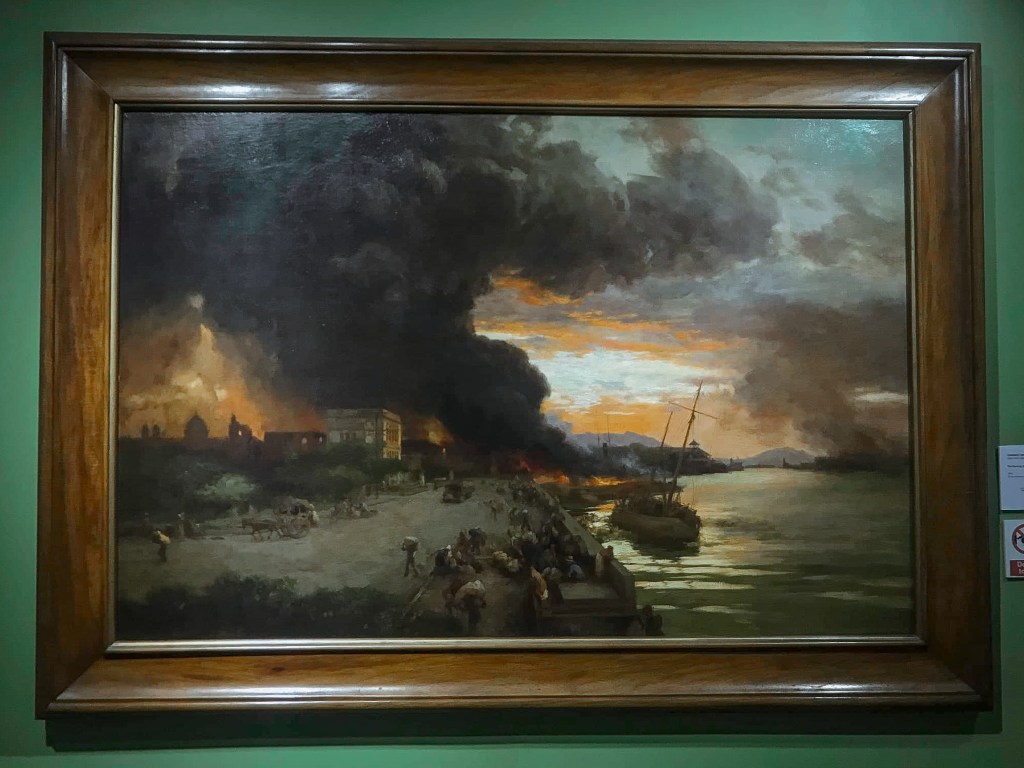
Fernando Amorsolo y Cueto, 1942
The museum’s collection of beautiful artworks of numerous Filipino Artist seems to be priceless because of its timeliness and importance to our history and culture. One of the painting that can be considered as timeless and important is the The Burning of Manila made by the National Artist for Painting himself, Fernando Amorsolo y Cueto. He was one of the most important artists in the history of painting in the Philippines.
Fernando Amorsolo was a known portraitist and a painter of rural Filipino life, but there was an obvious shift in his works during World War II. Where he used to paint idyllic landscapes and beautiful Filipina women, he shifted to depicting the destruction caused by war. In this piece, Manila is ravaged and almost engulfed in flames. Upon closer inspection, you can also see Filipinos fleeing from the scene, carrying their meager possessions.
This artwork depicts the idea how the Manila is devastated during that time. This painting shows the Battle of Manila happened during the Japanese era, he depicted the tragedy and horror in this battle.
Base on the artwork, the color defines the tone or the mood of the painting, it gives some glimpse that this painting has an awful and heart crashing meaning. Through the use of different elements he clearly express the emotions that can be felt during a war and depicts how devastating it was for our ancestors.
Source:
https://www.philippineartgallery.com/fernando-amorsolo.html
- Woman in Distress
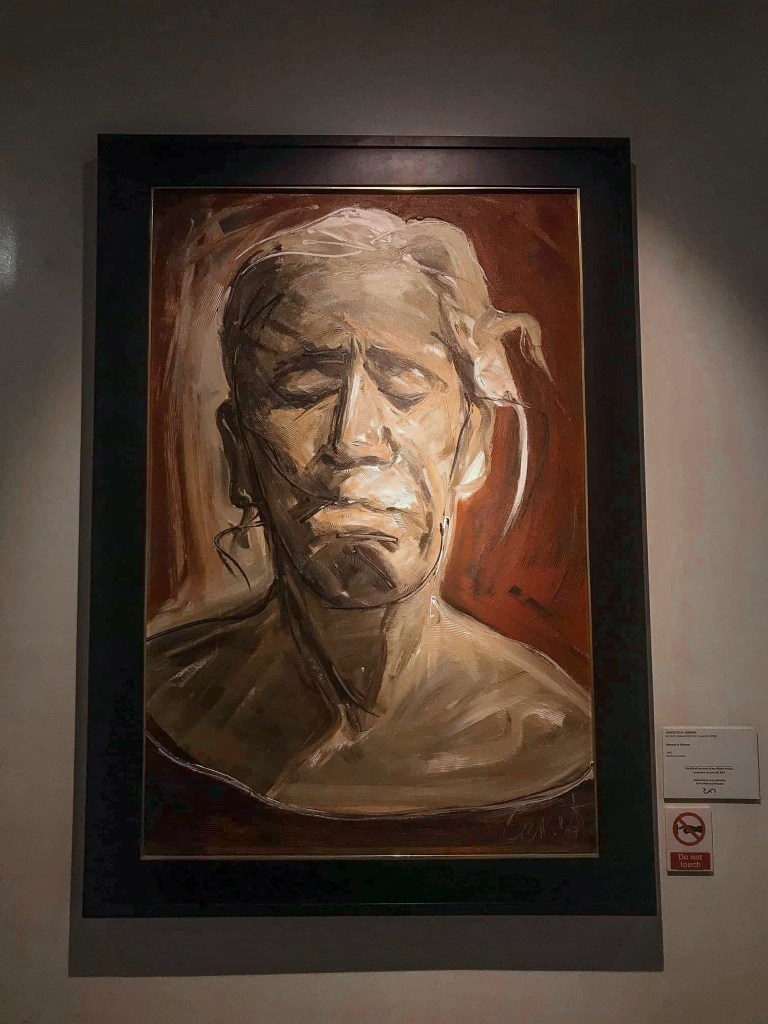
Benedicto R. Cabrera, 2007
As you continuously explore the museum and its galleries and hallways your eyes will surely be satisfied and as you continually walk you would felt numerous emotions express by different art pieces and the one that would surely give you a strong emotion is the painting, Woman in distress. The eye-catching monochromatic painting portrays a woman in deep stress with bold strokes, conveying a powerful image and emotions.
Benedicto Cabrera aka Bencab is considered the preeminent Filipino painter of his generation. Primarily figurative, Cabrera’s work often depicts woman and occasionally men wrapped in swirling, bundled fabrics and capes. Bencab has always been interested in movement and form. His paintings are infused with vigorous rhythmic brush strokes, flowing lines, and spirited body movements. The painting was painted in dark colors which represent the emotions and feelings that the painter was conveying to the audience also it portray melancholy, dislocation, and despair.
Source:
Pabst, J., (2019) Benedicto Cabrera. Retrieved from: http://www.artnet.com/artists/benedicto-cabrera/3
- An Old Woman with Mortar
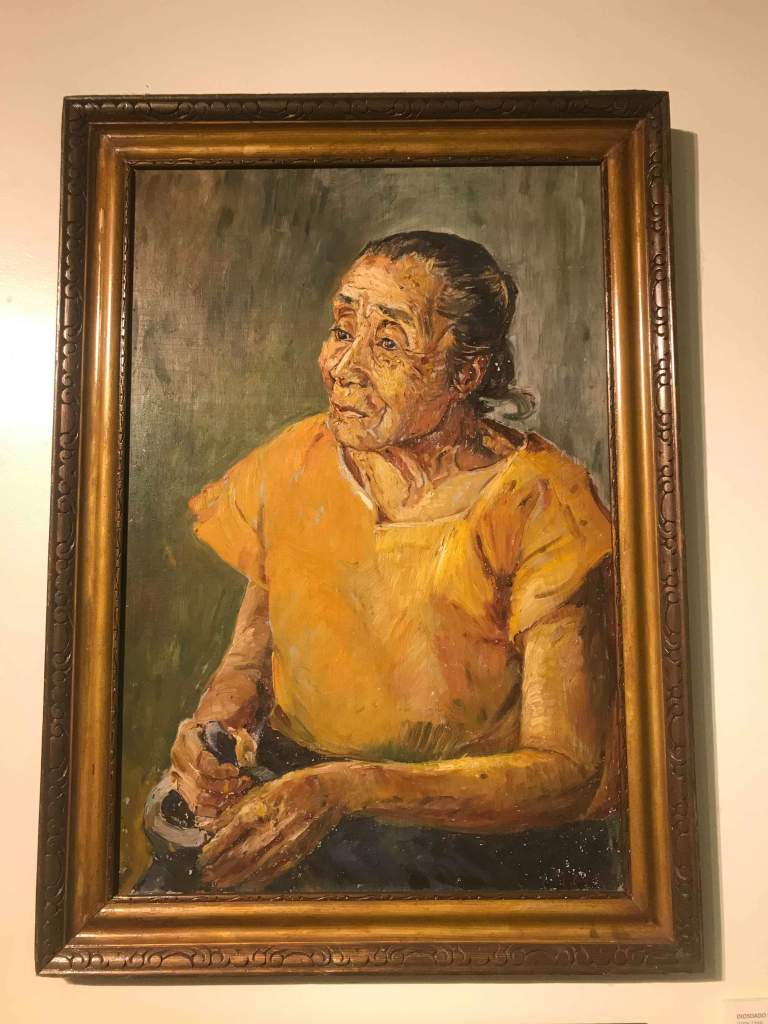
Diosdado M. Lorenzo, 1937
Artworks depicts many stories even those that are untold and being neglected by the society. The painting that shows a portrait of an old woman holding a mortar indicate the ways of preparing traditional food in the provinces. It portrays a simple story yet important to our culture as Filipinos. The paintings simplicity gives off a handful of stories and mixed emotions.
 ARTCCOUNTANTS